

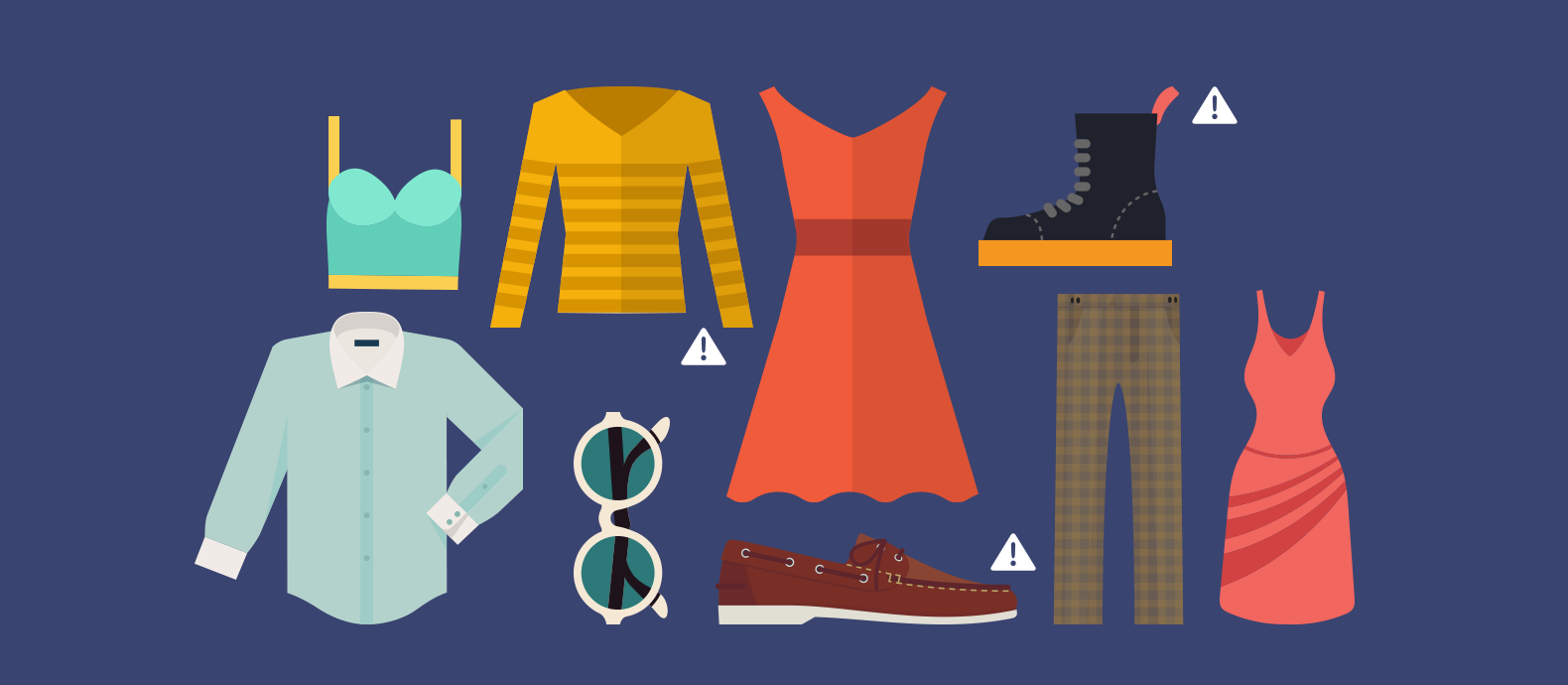
Fake designer clothes are no longer limited to obvious street-market knockoffs. Counterfeiters now sell through marketplaces, social media, resale platforms, paid ads, and fake webshops that can look convincing enough to mislead shoppers who are actively looking for genuine products.
That matters because the damage does not stop at the lost sale. When customers see fake versions of a fashion brand online, or accidentally buy one, they often blame the real brand for poor quality, weak control, or an unsafe shopping experience.
This article updates Red Points’ research on fake designer clothes, consumer behavior, and the brand risks fashion companies need to manage in 2026.
TL;DR
- Fake designer clothes damage brand reputation even when the brand did not sell the counterfeit item.
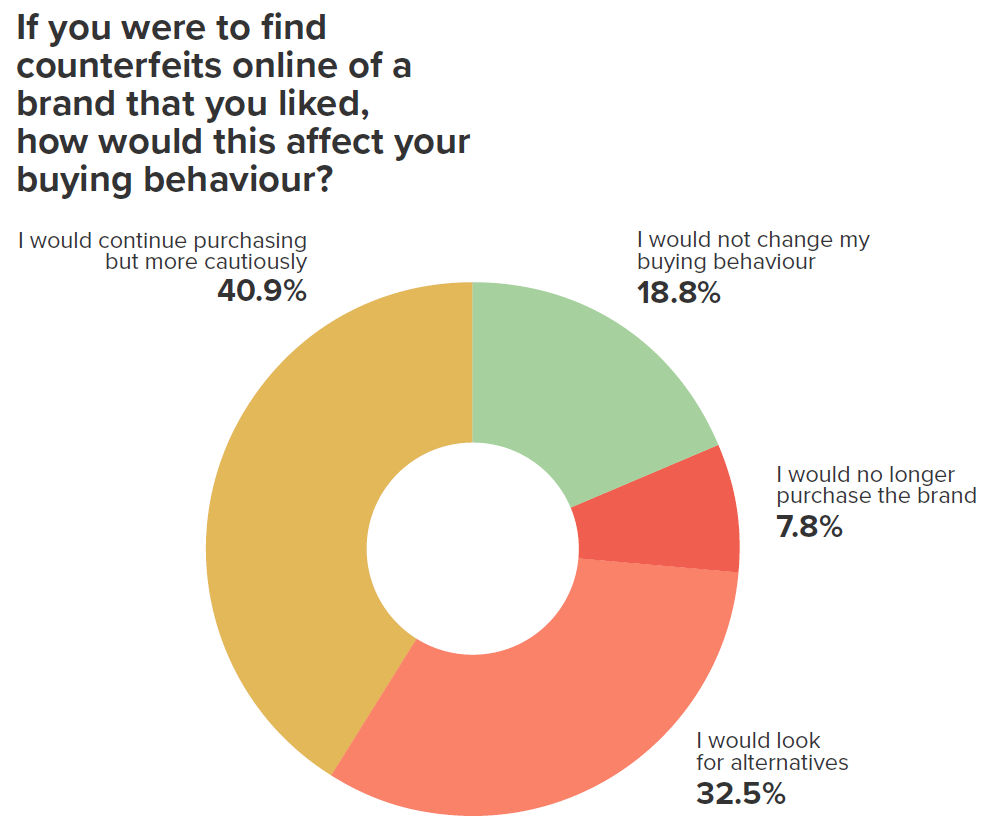
- 81% of consumers would negatively change their buying behavior toward a brand they liked after seeing fakes sold under that brand’s name online.
- Many consumers do not intentionally search for counterfeits. They are misled by familiar platforms, convincing listings, reviews, discounts, and social proof.
- Social media, resale platforms, marketplaces, and fake websites all create different counterfeit risks for fashion brands.
- Super fakes are especially dangerous because some shoppers who accidentally receive them may still be satisfied with the product.
- Fashion brands need continuous detection, evidence collection, enforcement, and recurrence monitoring across every channel where counterfeiters sell.
Why fake designer clothes are a brand reputation problem
Fake designer clothes create a reputational problem because customers often connect the bad experience with the brand they recognize, not the unknown seller behind the counterfeit.
This is especially damaging in fashion, where trust, aspiration, craftsmanship, exclusivity, and brand image are part of the product value. A poorly made counterfeit can make a shopper question the real brand’s quality, customer service, pricing, or online presence.
Red Points research shows how quickly this can affect buyer behavior:
- 81% of respondents would negatively change their buying behavior toward a brand they liked after seeing fakes online.
- 32% would look for an alternative brand if they became aware of counterfeits online.
- 8% would stop buying from the brand entirely if they found counterfeit versions of its products for sale.
That means counterfeit visibility alone can weaken future demand. A customer does not need to buy the fake for the real brand to lose trust.
The scale of the problem is also wider than luxury fashion alone. The OECD and EUIPO’s 2025 counterfeit trade report estimates that counterfeit and pirated goods represented USD 467 billion in global trade in 2021, with clothing, footwear, leather goods, and electronics among the top target categories.
For a broader foundation on how counterfeiting works across categories, see Red Points’ guide to counterfeiting and why it is illegal.
What happens when customers buy fake designer clothes by accident?
When customers buy fake designer clothes by accident, the brand can still suffer the complaint, review, refund pressure, or social media backlash.
In Red Points’ research, consumers who received a counterfeit item after believing they had bought an authentic product said they would respond in ways that create direct reputational risk:
- 22% would complain publicly on social media.
- More than 40% would submit a complaint to the ecommerce platform.
- 48% would warn friends and family about buying the brand’s products.
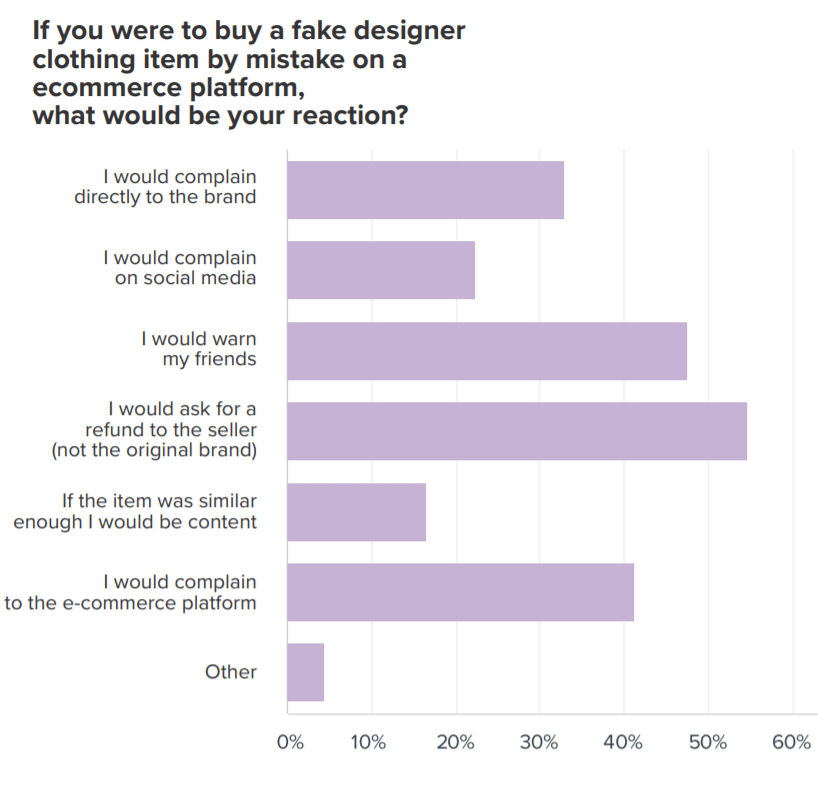
The public complaint is especially important. A single counterfeit purchase can become a post, comment thread, TikTok video, forum discussion, marketplace review, or customer support escalation. Other shoppers may not understand that the product came from an unauthorized seller.
This is why fashion brands need to treat counterfeits as both an IP issue and a customer experience issue. The faster a brand can detect counterfeit listings, preserve evidence, and remove repeat abuse, the less time those listings have to create negative customer interactions.
For social channels specifically, Red Points’ social media takedown guide explains how brands can report profiles, ads, posts, pages, and other platform abuse.
Where are fake designer clothes sold online?
Fake designer clothes are sold across marketplaces, social media platforms, resale apps, standalone websites, paid ads, search results, and private groups.
Each channel creates a different enforcement challenge.
| Channel | How counterfeiters use it | Brand risk |
| Marketplaces | Fake listings, cloned product pages, unauthorized seller accounts, manipulated reviews | Customers may believe the listing is platform-verified or legitimate |
| Social media | Organic posts, paid ads, influencer-style content, private messages, livestreams | Counterfeiters can build trust through followers, comments, and visual content |
| Resale platforms | “Pre-loved” listings, fake vintage items, replica designer accessories | Buyers may expect authenticity but not verify before purchase |
| Fake websites | Copied product photos, lookalike domains, fake checkout pages | Customers may think the brand operates the site |
| Search and ads | Paid search ads or indexed pages targeting brand keywords | Counterfeits can intercept high-intent shoppers |
The UK Intellectual Property Office’s 2026 guidance on shopping second-hand with confidence found that 1 in 4 UK pre-loved clothing buyers had unknowingly bought a counterfeit item online in the previous year, showing how resale growth creates new openings for counterfeit fashion sellers.
Brands dealing with counterfeit stores should also review Red Points’ guide on how to report websites selling counterfeit goods.
Why social media creates a high-risk counterfeit channel
Social media is high risk because counterfeiters can combine product images, comments, direct messages, ads, and private groups to create a believable shopping journey.
Red Points research found that:
- 65% of consumers would at least consider purchasing designer clothing on social media.
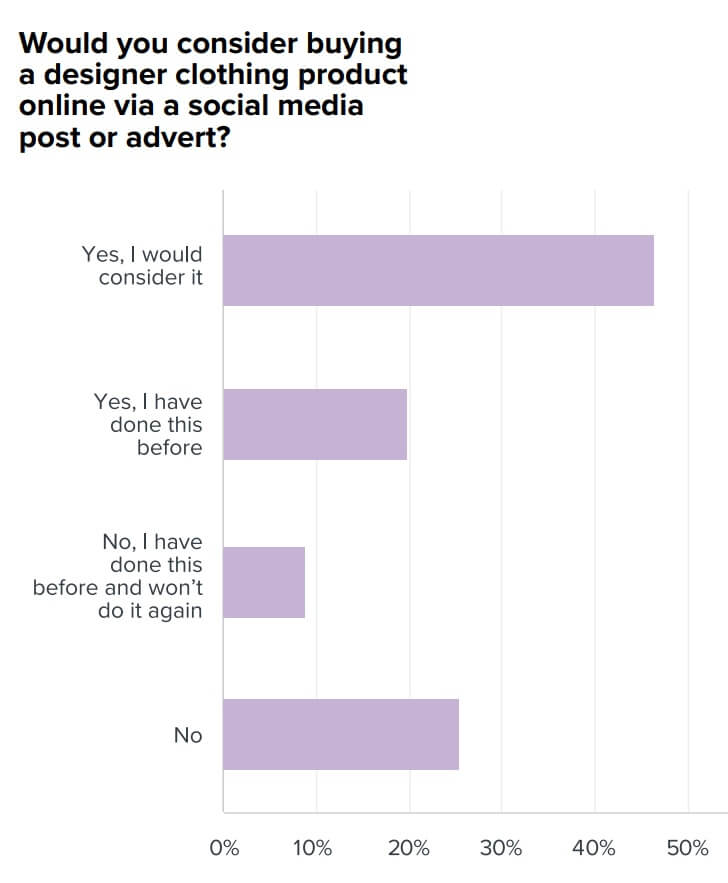
This creates three problems for fashion brands.
First, counterfeiters can launch and relaunch quickly. If one profile is removed, another account can reuse the same images, captions, hashtags, and follower tactics.
Second, customers may trust visual cues more than ownership signals. A polished profile, active comments, and attractive photography can make a fake seller look legitimate.
Third, social media counterfeiting often connects to other channels. A fake Instagram ad may lead to a counterfeit website. A TikTok Shop listing may reuse stolen product imagery. A Facebook group may direct customers to off-platform payment.
For brands seeing fake accounts or counterfeit promotions, Red Points’ guide on social media impersonation explains how impersonation and counterfeit sales often overlap.
Why shoppers miss the warning signs
Many shoppers rely on trust signals that counterfeiters can manipulate.
Red Points research found that when consumers assess authenticity online:
- 63% trust reviews and comments.
- 47% use star ratings on ecommerce listings.
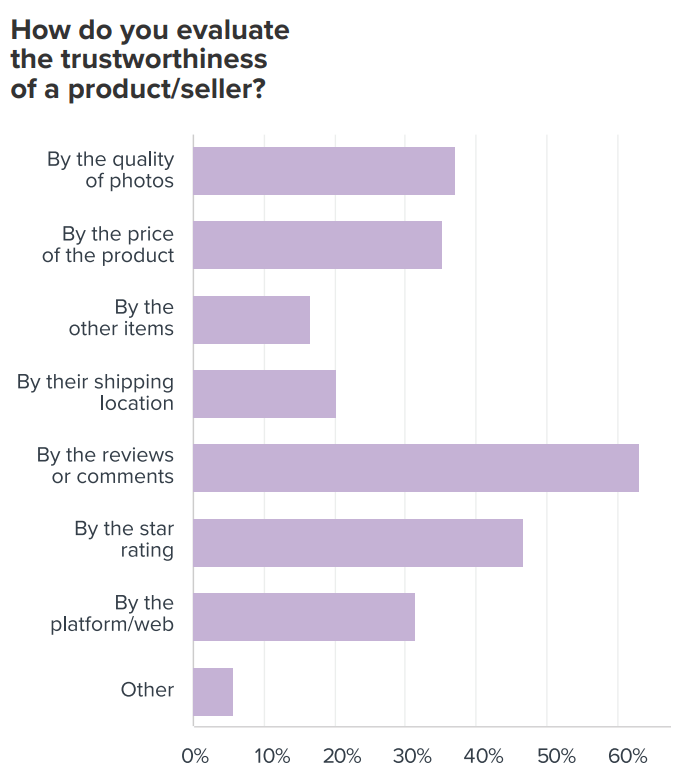
These signals can be useful, but they are not enough. Reviews, comments, and ratings can be copied, incentivized, botted, or attached to seller accounts that later switch to counterfeit inventory.
Brand protection teams usually look at a wider set of indicators, including:
- Seller history and connected seller accounts
- Other items listed by the same seller
- Product image reuse
- Shipping origin
- Price compared with recommended retail price
- Domain registration patterns
- Payment flow
- Product title and description inconsistencies
- Use of brand logos, trademarks, and copyrighted images
- Customer complaints and refund patterns
But shoppers often underuse these stronger signals. Red Points research found that only 16% of consumers look at the other items a seller has in stock, 20% check shipping location, and 35% use price as an authenticity signal.
This gap matters because counterfeiters rely on speed and confidence. If a listing looks familiar enough, uses enough social proof, and offers a discount that feels like a bargain, many shoppers do not investigate further.
For consumer-facing guidance, Red Points’ article on how to spot a fake product covers the most common signs shoppers can check before buying.
Most designer fashion shoppers still want authentic products
Most designer fashion shoppers are not actively looking for fake products. This is one of the most important findings for fashion brands.
Red Points research found that:
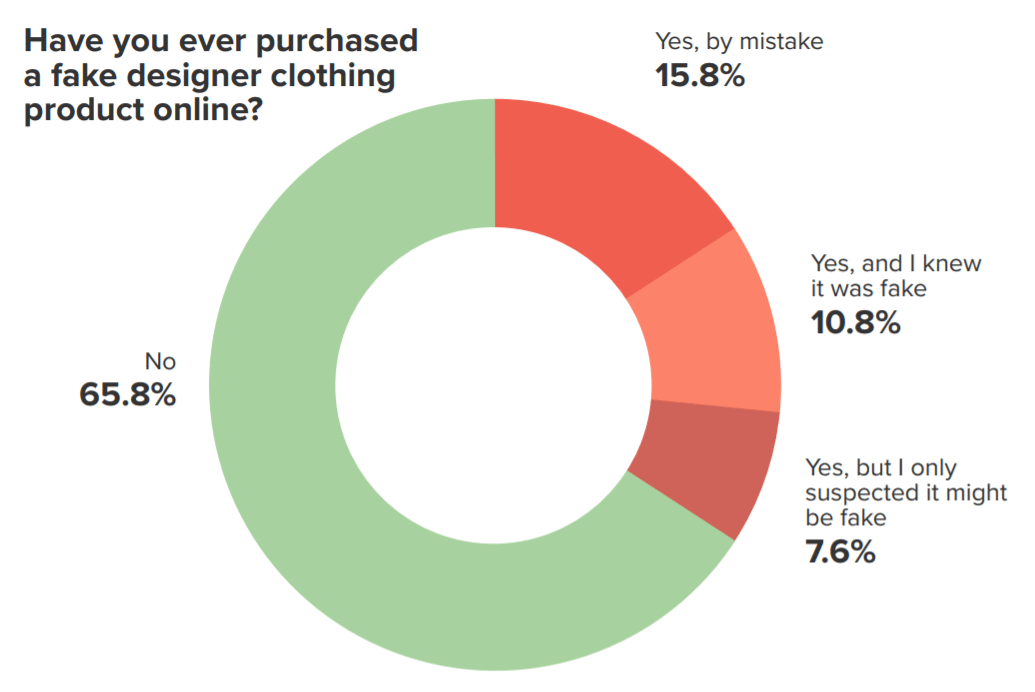
- 66% of respondents said they had never bought a fake product online.
- 23% had bought a fake product unintentionally.
- Fewer than 11% who bought a fake did so knowingly.
The intent data is even clearer:
- 88% of respondents who had bought fakes were initially searching online for an authentic white-market product.
- Only 11% went online with the intention of looking for fakes.
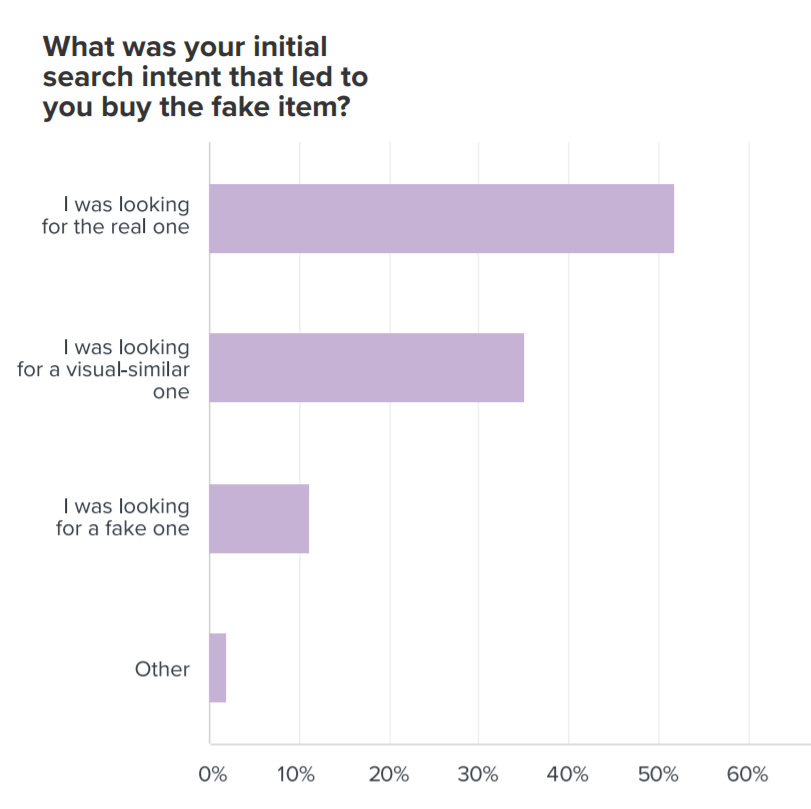
For brands, this changes the enforcement priority. The core threat is not only intentional counterfeit demand. It is consumer confusion.
When shoppers are searching for the real brand and end up with a fake, the brand loses control of the experience. The buyer may receive a poor-quality item, struggle to get a refund, post a complaint, or assume the brand failed to protect its customers.
This is also why trademark monitoring is important for fashion brands. Counterfeiters often rely on brand names, logos, packaging details, and product imagery to intercept genuine demand.
Why super fakes are especially dangerous for fashion brands
Super fakes are high-quality counterfeits that imitate the look, feel, branding, and presentation of genuine designer products more convincingly than obvious knockoffs.
They are dangerous because they can satisfy some customers even when those customers originally intended to buy authentic goods.
Red Points research found that:
- 67% of respondents who had previously bought a counterfeit product said they were satisfied with it.
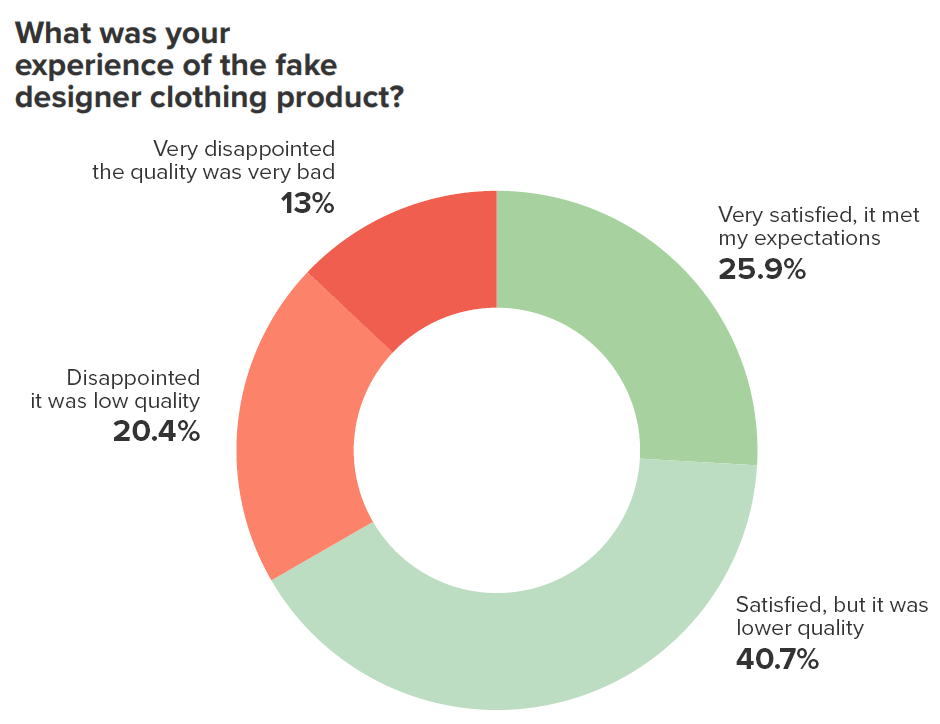
This creates a long-term risk. If a shopper accidentally buys a fake and decides it is “good enough,” the counterfeit seller has not only taken a sale. They may have changed the shopper’s perception of what the authentic product is worth.
Super fakes can also make customer education harder. Traditional warning signs, such as obviously poor stitching or low-quality logos, may not be visible in online photos. The listing may look professional, the reviews may look real, and the price may be low enough to tempt but not so low that it appears impossible.
Brands should treat super fakes as a monitoring and enforcement issue, not only a consumer-awareness issue. Education helps, but it cannot replace continuous detection and takedown across marketplaces, social media, and websites.
How fake designer clothes damage fashion brands
Revenue loss
Every counterfeit sale can divert demand away from the original product. The impact is worse when shoppers were actively looking for the authentic brand and were intercepted by a fake listing or website.
The risk increases during launch seasons, limited releases, or high-demand periods when shoppers actively search for the brand. When 88% of shoppers who bought fakes were looking for the authentic product, each counterfeit interception represents a real demand signal captured by a third party rather than the brand itself.
Reputation damage
Low-quality counterfeits can make customers question the real brand’s standards. Even if the customer later realizes the product was fake, the negative association can remain.
Customer support pressure
Customers who buy fakes may contact the real brand for refunds, repairs, authentication, or complaints. This creates support costs for a sale the brand never made.
Marketplace and channel conflict
Authorized sellers may be undercut by counterfeit listings, creating pressure on pricing and damaging relationships with legitimate retail partners.
Social media backlash
Counterfeit purchases can become public complaints. Once a fake product experience is shared online, the brand may have to manage the reputational fallout even if it had no role in the transaction.
Red Points research found that 22% of shoppers who received a counterfeit item said they would complain publicly on social media. A single post, TikTok video, or forum comment can reach thousands of other potential buyers before the brand can respond.
Loss of exclusivity
Luxury and designer fashion depend heavily on perceived quality, scarcity, and brand control. Widespread counterfeiting can dilute that sense of exclusivity.
This risk is especially acute when super fakes are involved. When 67% of respondents who had bought a counterfeit said they were satisfied with it, counterfeits are not just taking a sale. They are normalizing a lower-quality version of the brand’s product and weakening the perception of what genuine products are worth.
Repeat abuse
Counterfeiters rarely stop after one listing is removed. They may relaunch under new seller names, domains, social profiles, or ad accounts.
For a broader strategy view, see Red Points’ guide to fashion brand protection.
How fashion brands can respond to fake designer clothes
Step 1: Monitor the channels where customers actually shop
Start with the channels where counterfeiters are most likely to reach your buyers. For fashion brands, this usually includes marketplaces, social media, search results, paid ads, resale platforms, websites, and private seller communities.
Monitoring should cover brand names, product names, logos, common misspellings, campaign names, product images, and counterfeit keywords such as “replica,” “dupe,” “1:1,” “inspired,” or “mirror quality.”
Step 2: Separate counterfeits from unauthorized or gray-market sales
Not every unauthorized listing is a counterfeit. Some sellers may offer genuine goods through unauthorized resale, parallel import, liquidation, or second-hand channels.
Before filing enforcement requests, brands should confirm whether the listing uses fake products, copied assets, trademark misuse, misleading authenticity claims, or other enforceable infringement.
For gray-market issues, Red Points’ gray market guide can help separate genuine unauthorized sales from counterfeit goods.
Step 3: Preserve evidence before reporting
Collect evidence before the seller edits or removes the listing. Useful evidence includes:
- Listing URL
- Seller name and profile URL
- Screenshots with timestamps
- Product images
- Product title and description
- Price
- Shipping location
- Reviews or comments
- Checkout flow
- Connected domains or social profiles
- Customer complaints
- Proof of IP ownership
Strong evidence reduces rejection risk and helps platforms understand why the product is fake.
Step 4: Use the correct enforcement route
The right reporting route depends on the channel and type of infringement.
Use trademark complaints when the seller misuses your brand name, logo, product marks, packaging, or other protected identifiers. Use copyright complaints when sellers copy product photography, campaign images, videos, website content, or other protected creative assets.
For websites, brands may need to report the host, registrar, platform, payment provider, ad network, and search engine separately. Red Points’ guide on reporting counterfeit websites explains how to choose the right route.
Step 5: Track outcomes and recurrence
A takedown is not the end of the process. Counterfeit sellers may relist the same product, move to another platform, reuse the same images, or send shoppers to a new website.
Brands should track:
- Which reports were accepted or rejected
- How long removal took
- Which sellers relaunch
- Which platforms have the highest recurrence
- Which products are most frequently copied
- Whether the same seller network appears across multiple channels
This turns enforcement from a manual reaction into a repeatable intelligence process.
Step 6: Educate customers without shifting responsibility onto them
Customer education helps, especially for resale and social commerce. But brands should avoid making customers feel solely responsible for detecting counterfeits.
Useful education can include:
- Where to buy authentic products
- How to identify official channels
- How to report suspicious listings
- What documentation comes with genuine products
- When to be cautious about discounts
- How the brand handles authentication requests
The strongest approach combines customer education with active enforcement.
What should fashion brands do next?
Fake designer clothes are not only a counterfeit product problem. They are a reputation, customer trust, ecommerce, resale, social media, and enforcement problem.
The most effective response is to treat counterfeiting as a continuous online risk. Brands need to know where fakes appear, how shoppers are being misled, which sellers are recurring, and which enforcement routes work fastest.
For fashion brands, the priority is not simply removing one fake listing. It is reducing the time between detection and enforcement across every channel where customers discover, compare, and buy.
How Red Points helps fashion brands remove counterfeits
Manual enforcement can work for isolated counterfeit listings. It becomes difficult when fake designer clothes appear across marketplaces, social media, resale platforms, ads, search, and fake websites at the same time.
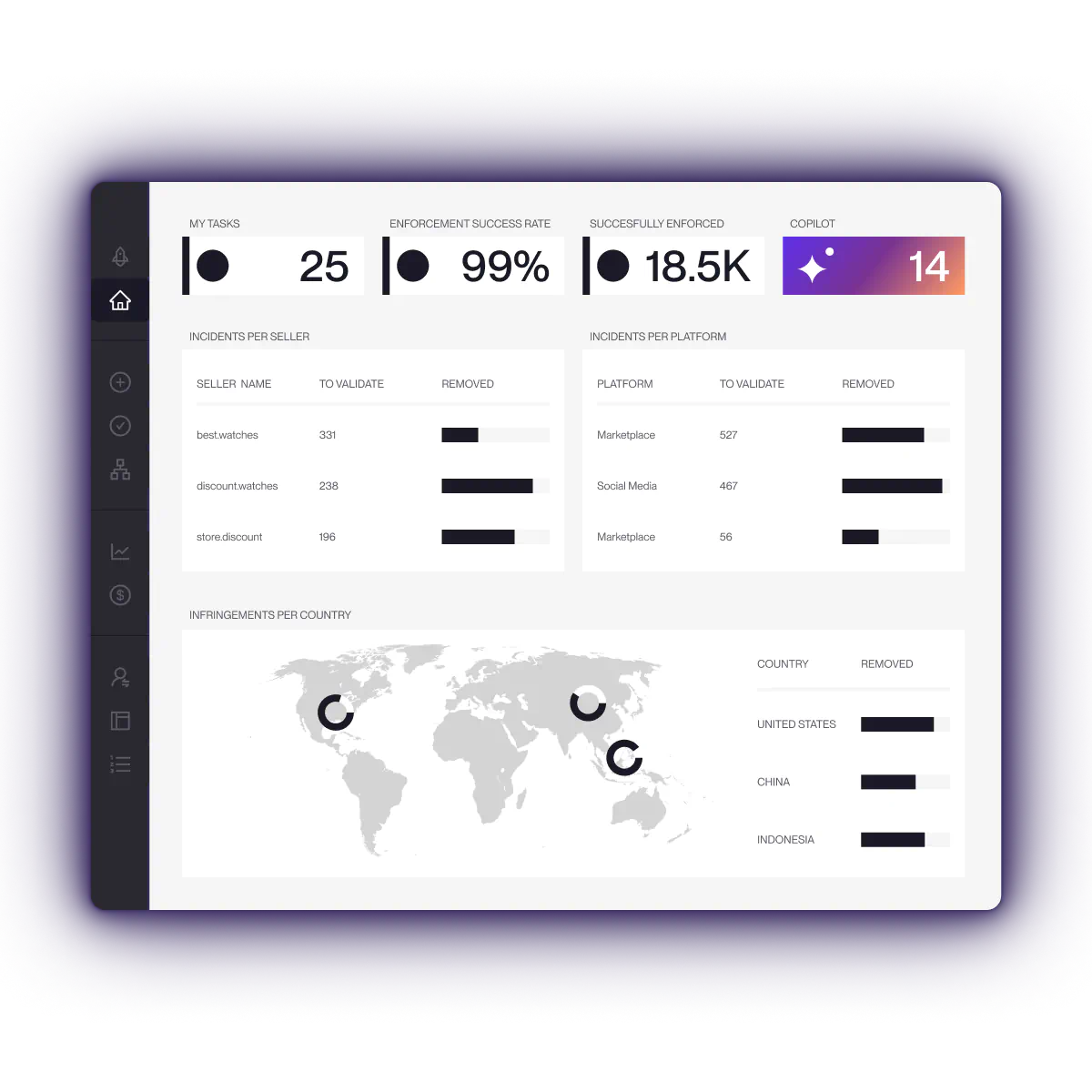
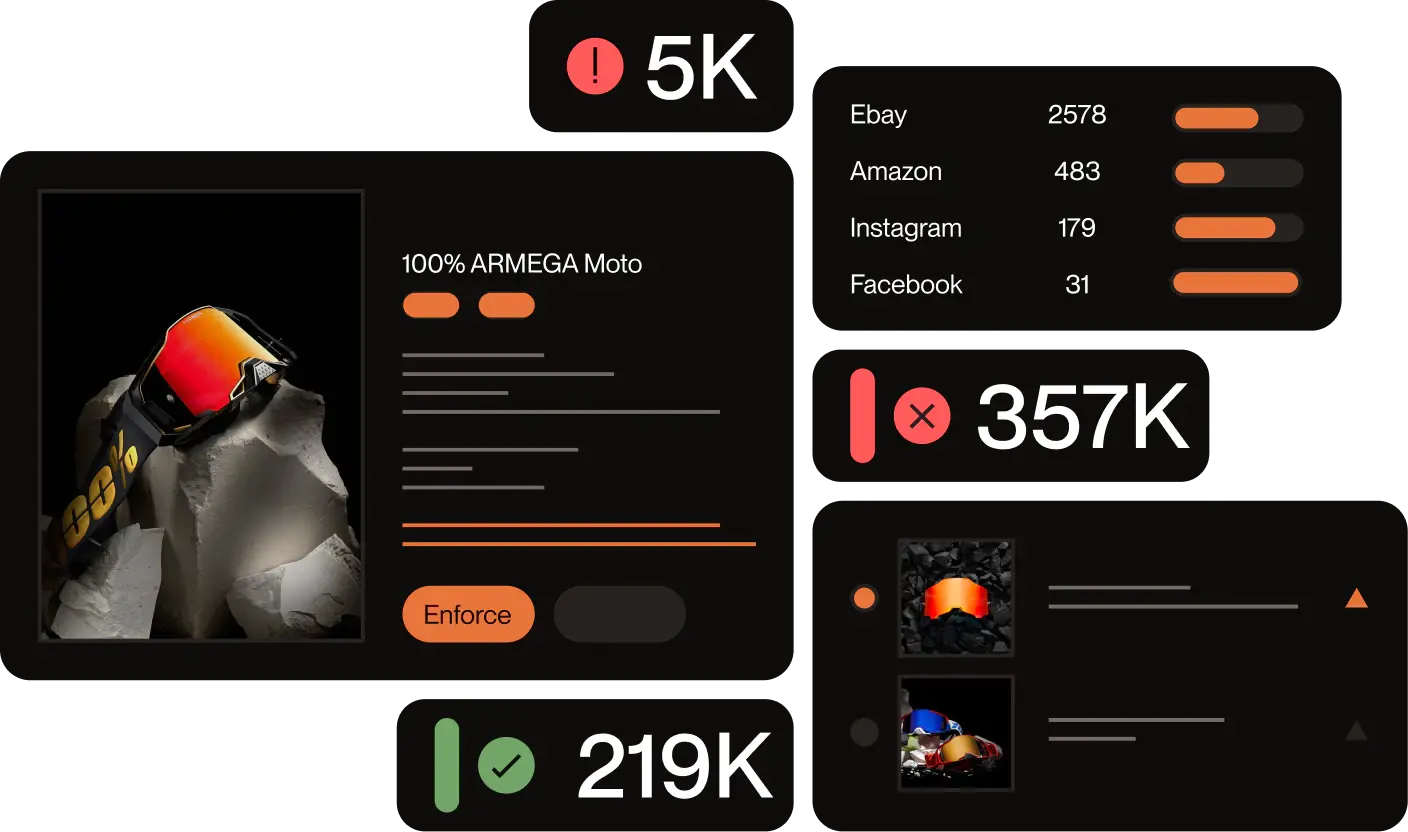
Red Points Brand Protection helps fashion brands detect, validate, and remove counterfeits across multiple online channels. The workflow can support:
- Marketplace counterfeit detection
- Social media counterfeit monitoring
- Fake website and domain detection
- Product image matching
- Seller and network intelligence
- Evidence collection
- Takedown submission
- Recurrence tracking
- Reporting across teams and markets
Red Points processes more than 5.1 million enforcements per year across piracy, websites, marketplaces, social media, search engines, and other digital channels.
A validation layer helps filter false positives before enforcement is submitted, so only confirmed infringements are actioned.
For brands that want a fully managed approach, Red Points’ specialists handle detection and enforcement. Teams validate where they choose to, without manually reviewing every identified listing.
Request a demo to see how Red Points helps fashion brands detect and remove counterfeit products at scale.
Frequently asked questions
Fake designer clothes are counterfeit fashion items that copy a brand’s protected name, logo, product design, labels, packaging, or overall presentation without authorization. They are usually sold as genuine products, replicas, dupes, or “inspired” alternatives.
Fake designer clothes damage brands by diverting sales, weakening customer trust, creating complaints, reducing perceived exclusivity, and exposing customers to poor-quality or unsafe products. Even when a brand did not sell the counterfeit item, customers may still associate the negative experience with the real brand.
No. Red Points research found that many shoppers who bought fakes did so unintentionally. In the research, 88% of respondents who had bought fakes were initially searching for an authentic product, while only 11% were intentionally looking for fakes.
Counterfeit designer clothes are sold on marketplaces, social media platforms, resale apps, fake websites, paid ads, search results, and private seller groups. Counterfeiters often use several channels together, such as a social media ad that sends shoppers to a fake webshop.
Super fakes are high-quality counterfeits designed to closely imitate authentic designer products. They can use better materials, more accurate logos, convincing packaging, and professional online listings, making them harder for customers and platforms to identify.
Fashion brands can find fake designer clothes by monitoring brand names, product names, logos, product images, seller behavior, suspicious keywords, pricing anomalies, social media accounts, marketplace listings, fake websites, and customer complaints. Automated image recognition and seller network analysis can also help detect repeat counterfeiters.
Brands should collect the listing URL, seller profile, screenshots, timestamps, product images, price, description, shipping details, customer complaints, checkout information, connected accounts, and proof of IP ownership. Strong evidence helps platforms process enforcement requests more effectively.
Yes. Brands can report counterfeit posts, ads, profiles, shops, and messages through platform reporting routes. The right route depends on whether the issue is trademark infringement, copyright infringement, impersonation, fraud, scam advertising, or another policy violation.
Yes. Resale platforms can be valuable legitimate channels, but they also create opportunities for counterfeiters to present fake items as pre-loved, vintage, or lightly used authentic products. Brands should monitor resale channels alongside marketplaces, social media, and fake websites.
Red Points helps fashion brands detect, validate, report, remove, and monitor counterfeit listings across marketplaces, social media, domains, ads, search, and other online channels. It also helps brands track recurrence so counterfeit sellers cannot simply relaunch under a new account or domain.