

Registering a trademark gives you legal rights. It does not stop a seller from adding your logo to a fake marketplace listing, an impersonator from opening a social account in your name, or a scammer from launching a domain that looks like yours.
Those incidents often appear long before customers or employees notice them. By then, the listing may have generated sales, the fake account may have contacted customers, and the domain may already be ranking or running ads.
Trademark monitoring closes that gap. This guide explains what online trademark monitoring covers, how it works, what evidence brands need for enforcement, and how to choose a monitoring service that can keep pace with infringement volume.
TL;DR
- Trademark monitoring is the ongoing process of finding unauthorized use of your brand name, logo, slogan, packaging, and other protected marks online.
- A USPTO registration gives you enforceable rights, but trademark owners are generally responsible for finding and acting against infringement.
- Effective monitoring covers marketplaces, domains, websites, social media, ads, search engines, app stores, and new trademark filings.
- Automated monitoring combines text, image, logo, seller, pricing, and infrastructure signals to find incidents that manual searches miss.
- Brands should collect the URL, screenshots, seller or account information, trademark registration details, and evidence of confusion before filing a report.
- A fully managed platform can handle the ongoing detection and enforcement work while the brand remains in control through an approved enforcement strategy.
What is trademark monitoring?
Trademark monitoring (also written trade mark monitoring in the UK and some other jurisdictions) is the ongoing process of searching for unauthorized use of a protected name, logo, slogan, symbol, packaging design, or other brand identifier.
Online trademark monitoring looks beyond official trademark databases. It checks the places where customers encounter products and brands, including marketplaces, websites, domains, social platforms, ads, search results, and mobile apps.
Its purpose is to find potential infringement early enough to limit customer exposure and make enforcement easier.
Trademark monitoring may uncover:
- Counterfeit listings using your name or logo
- Sellers copying branded packaging
- Fake social media profiles
- Domains containing your trademark
- Websites impersonating your company
- Paid ads using your brand identity
- Apps using your name or logo without permission
- Sellers changing the spelling or appearance of a mark to avoid detection
Monitoring is different from trademark registration. Registration establishes your rights. Monitoring helps you see where those rights are being misused.
It is also different from trademark watching. A trademark watch usually checks official trademark databases for new applications that may conflict with your mark. Online trademark monitoring tracks how marks are being used in commerce across digital channels. Most established brands need both.

Why is trademark registration not enough?
The USPTO trademark process makes the division of responsibility clear. The USPTO examines and registers marks, but trademark owners are responsible for enforcing their rights against unauthorized use.
A registration cannot patrol Amazon, detect a new fake Instagram profile, or spot a lookalike domain. It gives you a stronger basis for action once you find the problem.
That distinction is easy to miss. A brand may complete the registration process and assume the mark is protected everywhere. Meanwhile, third parties can still use it in:
- Marketplace titles and images
- Seller and storefront names
- Social media profiles
- Paid ads
- Domain names
- Fake ecommerce sites
- Mobile app listings
- Search engine results
Prolonged inaction against known infringement can also complicate future enforcement in some situations. The legal impact depends on the facts and jurisdiction, but allowing confusing use to spread makes the practical problem harder to contain.
Registration remains the starting point. Monitoring is how brands turn those rights into an active protection program.
For issues involving company or trade names specifically, see Red Points’ guide to business name trademark infringement.
What types of trademark infringement should brands monitor?
Trademark misuse appears in different forms, and the same actor may use several at once.
Counterfeit product listings
A counterfeit listing uses a protected mark to make a fake product appear genuine.
The seller may use:
- Your brand name in the title
- Your logo on the product
- Copied packaging
- Official product photos
- A seller name that suggests authorization
- Descriptions copied from your website
Counterfeit listings are common on large marketplaces, resale platforms, social commerce channels, and domestic ecommerce platforms.
Brand and business impersonation
An impersonator copies your identity to appear connected to your company.
This may involve:
- Fake customer support profiles
- Executive impersonation
- Fake social media pages
- Lookalike websites
- Seller storefronts containing your company name
- Accounts using your logo and biography
These incidents often create direct customer harm because users believe they are dealing with the real company.
Lookalike domains and fake websites
Bad actors register domains that resemble your official address, then use them for phishing, counterfeit sales, fake promotions, or credential theft.
Examples include:
- Misspellings
- Added words such as “support,” “sale,” or “outlet”
- Alternative domain extensions
- Hyphenated names
- Characters that visually resemble letters in your mark
Red Points’ domain management guide explains how domain monitoring, recovery, and takedown fit together.
Unauthorized trademark use in ads
A third party may use your trademark in ad text, display URLs, social ads, or creative assets.
Some trademark use in advertising may be permitted, depending on the context. Others may mislead users or promote counterfeit goods. Google’s trademark policy explains when trademark owners can submit a complaint about use in Google Ads.
Fake or misleading apps
An app may use your brand name, logo, screenshots, or product identity to attract downloads.
Common risks include:
- Credential theft
- Fake shopping apps
- Unauthorized product guides
- Apps that redirect users to scams
- Copies of an official mobile service
Trademark dilution
Dilution can arise when a famous mark is used in a way that weakens its distinctiveness, even where customers are not directly confused about the source.
This is a more specialized legal issue. Brands facing suspected dilution should involve trademark counsel before taking action.
Which channels should brands monitor?
The right channel mix depends on where your products are sold, where customers discover your brand, and where abuse has appeared before.
| Channel | What to monitor | Common risk | Typical first response |
| Marketplaces | Listings, seller names, images, packaging, prices | Counterfeits and misleading sellers | Platform IP report |
| Websites | Branding, products, checkout pages, copied content | Fake stores and impersonation | Host, registrar, platform, or legal notice |
| Domains | New registrations, typos, TLDs, email records | Phishing and cybersquatting | Registrar report, domain action, or UDRP |
| Social media | Profiles, posts, groups, shops, ads | Impersonation and counterfeit promotion | Platform trademark or impersonation report |
| Search and ad networks | Ad text, display URLs, landing pages | Traffic diversion and fake promotions | Ad platform complaint |
| App stores | App name, icon, screenshots, description | Fake apps and credential theft | App store IP complaint |
| Trademark databases | New applications and registrations | Conflicting marks | Opposition or legal review |
Ecommerce marketplaces
Marketplaces remain a high-priority channel for consumer brands because sellers can create new listings quickly and reach buyers across borders.
Monitoring should cover:
- Exact brand terms
- Common misspellings
- Product names
- Logo use
- Copied imagery
- Suspicious prices
- Stock levels
- Seller history
- Repeat storefronts
Amazon offers rights holders tools through Brand Registry, while eBay allows rights owners and authorized representatives to report listings through its VeRO program.
The platforms differ, but the operational problem is similar: brands still need to find the listings, connect them to the right IP, and track sellers who return.
Standalone websites and domains
Fake stores and imitation domains often sit outside established marketplaces, which makes enforcement less predictable.
Brands should monitor:
- Domain registrations containing the mark
- Common typos
- Added commercial terms
- DNS and email records
- Redirects
- Hosting infrastructure
- Copied website content
- Payment pages
- Customer complaints
A domain may become dangerous before a full website appears. Active MX records, for example, can show that the domain is being prepared for email impersonation.
Social media
Trademark abuse on social platforms can move quickly because fake accounts, ads, shops, posts, and private groups reinforce one another.
Monitoring should cover:
- Account names
- Profile images
- Bios
- Product posts
- Links in profiles
- Paid ads
- Marketplace features
- Messages reported by customers
Ads and search engines
A trademark may appear in paid search ads, social ads, shopping ads, display placements, or landing pages.
Brands should look beyond the visible ad copy. A harmless-looking ad may redirect by location, device, or time of day to a fake store.
How does digital and online trademark monitoring work?
A strong monitoring program has four working stages: detection, validation, enforcement, and learning.
1. Detection
The system searches relevant channels for possible misuse.
Detection may use:
- Exact and fuzzy keyword matching
- Logo recognition
- Image matching
- OCR for text inside images
- Product and packaging comparisons
- Seller behavior
- Pricing and stock signals
- Domain variations
- Repeat-account patterns
Keyword matching alone is rarely enough. Sellers often remove the brand name from the text while keeping the logo, packaging, or product appearance in the image.
2. Validation
Detection produces leads. Validation determines which incidents should be actioned.
This is where a managed program avoids careless takedowns.
Validation can happen through:
- Pre-approved brand rules
- Red Points expert oversight
- Case-by-case client review where the brand wants it
- Automated suggestions based on past decisions
A brand might approve a rule that treats every listing on a marketplace where it has no authorized distribution as infringing. Other rules can use price, stock, seller behavior, product category, or known counterfeit indicators.
The client sets the enforcement boundaries. The operational work does not have to sit with the client.
3. Enforcement
Once an incident has been validated under the approved strategy, the takedown workflow can start automatically.
The correct route depends on the channel and right involved. It may include:
- Marketplace IP reports
- Social platform trademark complaints
- App store reports
- Registrar or host notices
- Ad network complaints
- Search engine removal requests
- UDRP or legal escalation
The platform response still depends on its own policies, the quality of evidence, and the type of claim.
4. Learning
Monitoring should improve as the program runs.
Past validation and enforcement decisions reveal patterns such as:
- New seller clusters
- Recurring price points
- Common misspellings
- Product combinations
- Reused images
- High-risk marketplaces
- Stock patterns
- Effective enforcement routes
Machine learning can use these decisions to suggest new keywords and validation rules. The brand can approve the recommendations before they become part of the enforcement strategy.
Manual vs automated trademark monitoring
Manual checks can work for a small brand with a limited product line and a low infringement volume. They become unreliable once the problem spreads across platforms or countries.
| Manual monitoring | Automated monitoring |
| Depends on scheduled searches | Runs continuously |
| Usually relies on visible keywords | Can combine text, image, logo, seller, and pricing signals |
| Reviews one channel at a time | Covers multiple channels at once |
| Evidence is often collected manually | Can capture and organize incident data |
| Repeat sellers are difficult to connect | Can track seller and account patterns |
| Workload rises with infringement volume | Rules and prioritization reduce repetitive work |
| Enforcement is submitted one case at a time | Validated cases can enter automated workflows |
Automation does not mean removing the brand from the decision. It means defining the rules once, applying them consistently, and reserving human attention for uncertain or higher-risk cases.
How do you prevent trademark infringement?
No monitoring program can prevent every attempt to misuse a mark. It can reduce the time an incident remains live, make repeat abuse harder, and give brands a consistent way to respond.
Register the marks you rely on
Register your core word marks, logos, product names, and other source identifiers in the markets where you sell or plan to sell.
For U.S. protection, use the USPTO trademark search before filing and review your classes carefully.
A registration should match the products and services the business actually offers. An outdated portfolio can leave gaps as the brand expands.
Document your IP and authorized channels
Keep a current record of:
- Registration numbers
- Jurisdictions
- Classes
- Renewal dates
- Official logos
- Packaging
- Product images
- Authorized sellers
- Approved marketplaces
- Official websites and social accounts
This information supports both detection and enforcement.
Enroll in platform programs
Use the formal rights-holder tools available on important platforms.
For U.S. brands, this may include:
- Amazon Brand Registry
- eBay VeRO
- Google Ads’ Trademark Troubleshooter
- Social platform IP and impersonation reporting systems
- App store trademark complaint routes
Enrollment can improve access to reporting tools, but it does not replace monitoring.
Define enforcement priorities
A brand does not have to treat every incident identically.
Priorities may depend on:
- Customer safety
- Sales volume
- Product type
- Price
- Stock
- Visibility
- Repeat seller behavior
- Country
- Channel
- Use of paid ads
- Evidence of customer confusion
Clear priorities keep teams from spending equal effort on a single low-visibility listing and a large counterfeit seller running ads.
Act consistently
Consistent enforcement gives platforms clearer evidence and makes repeat patterns easier to document.
It also gives internal teams reliable data on where abuse is growing, which rights are most useful, and which channels need more attention.
Review the portfolio as the business changes
New products, names, markets, campaigns, and partnerships can change what needs protection.
Review the trademark portfolio when the business:
- Launches a new product line
- Expands internationally
- Enters new marketplaces
- Rebrands
- Acquires another company
- Changes distributors
- Sees a spike in impersonation
What evidence do you need to report trademark infringement?
A platform can only assess the case you submit. Weak documentation slows the process and makes disputes harder to manage.
Collect the following before reporting an incident:
- Direct URL of the listing, profile, ad, website, app, or domain
- Screenshots showing the infringement
- Date and time captured
- Seller, account, or domain details
- Trademark registration number
- Registration jurisdiction
- Relevant goods or services
- Official brand or product reference
- Explanation of why the use is unauthorized
- Evidence of customer confusion, where available
- Links to earlier reports involving the same actor
- Authorization to act for the rights holder, if applicable
For counterfeit listings, comparisons can be especially useful. Show differences in packaging, logo placement, labels, colors, product variants, or other details known to the brand.
Avoid generic claims such as “this seller is fake.” Explain which mark is being used, where it appears, and why the use is likely to mislead buyers.
How do you stop trademark infringement after finding it?
The right response depends on the channel, the harm, and the legal basis.
Marketplace listings
Use the platform’s IP reporting system and match the complaint to the relevant trademark registration.
Track the seller after removal. Many offenders relist under new product IDs, storefronts, or accounts.
Social media accounts and content
Use the platform’s trademark or impersonation process.
Save the account URL, handle, bio, profile image, posts, ads, and any messages shared by customers.
Websites and domains
Identify the registrar, host, ecommerce platform, payment provider, and other infrastructure involved.
Depending on the case, action may include:
- Registrar abuse report
- Hosting provider notice
- Platform complaint
- Search engine removal
- Payment provider escalation
- Cease and desist letter
- UDRP complaint
- Court action
Paid ads
Use the ad platform’s trademark or counterfeit reporting route.
Capture the ad itself, display URL, destination URL, advertiser information, search term, and any location-specific behavior.
Mobile apps
Report the app to the relevant app store using your trademark registration and screenshots showing the misuse.
Repeat or high-value infringement
Platform takedowns may be insufficient where the same network keeps returning, or the economic harm is significant.
These cases may require deeper investigation, formal legal notices, domain proceedings, customs action, or litigation.
What should you look for in a trademark monitoring service?
“Trademark monitoring service” can refer to very different products. Some track trademark applications. Others detect online abuse but leave the reporting work to the customer.
Ask vendors to explain the full workflow.
| Capability | Questions to ask |
| Coverage | Which marketplaces, websites, domains, social platforms, ads, apps, and regions are monitored? |
| Detection | Does the system use image and logo recognition, or only keywords? |
| Brand customization | Can it learn your products, authorized sellers, prices, and past decisions? |
| Validation | Who confirms an incident before enforcement? |
| Client control | Can the brand approve rules without reviewing every listing? |
| Enforcement | Are takedowns submitted for you, or only recommended? |
| Expert support | Who handles exceptions, rejected reports, and difficult platforms? |
| Repeat infringers | Can the service connect sellers, accounts, domains, and reused assets? |
| Reporting | Can you measure removals, time to removal, recurring sellers, and economic impact? |
| Pricing | Does cost rise with every incident, detection, or takedown? |
Channel coverage
Start with your real exposure rather than the vendor’s longest platform list.
A U.S. consumer brand may need strong coverage across Amazon, Walmart Marketplace, eBay, TikTok Shop, Meta, Google, fake websites, domains, and overseas platforms that target U.S. buyers.
Image and logo recognition
Text-only tools miss listings that avoid obvious brand terms.
Ask whether the system can detect:
- Cropped logos
- Recolored marks
- Text inside images
- Copied packaging
- Reused product photos
- Modified visual assets
Validation and control
The service should explain how false positives are filtered and how the brand approves enforcement.
A good process gives the client control without shifting routine work back to the internal team.
Enforcement capability
Some services stop at detection. That means the customer still has to document, submit, and track every report.
Check whether the provider manages the full workflow and how it handles platform rejection, counter-notices, or repeat offenders.
Pricing model
Per-incident and analyst-hour pricing can become difficult to forecast when infringement spikes.
A flat-fee model with unlimited detection and enforcement keeps the cost stable when bad actors increase their activity.
How has AI changed trademark monitoring?
Generative AI has reduced the effort needed to create convincing variants of brand assets.
Bad actors can now produce:
- Modified logos
- Synthetic product images
- Recolored packaging
- Rewritten marketplace listings
- Fake reviews
- Localized storefront copy
- Social ads using brand cues
- Large numbers of listing variations
This weakens older detection methods that rely heavily on exact brand terms.
Modern monitoring has to compare visual and behavioral signals as well as text. A listing may avoid the trademark in its title while showing the logo in the image. A fake store may rewrite every product description while copying the layout, packaging, and customer journey.
AI also improves protection. Image recognition, OCR, risk scoring, seller clustering, and rule recommendations help teams find and prioritize incidents that ordinary searches would miss.
The useful question is not whether a monitoring service “uses AI.” It is what the system can detect, how the results are validated, and whether those results lead to reliable enforcement.
What continuous trademark monitoring can change
A global fashion group had been dealing with roughly 4,000 infringements each month. The volume made manual review difficult, and the same types of abuse kept returning.
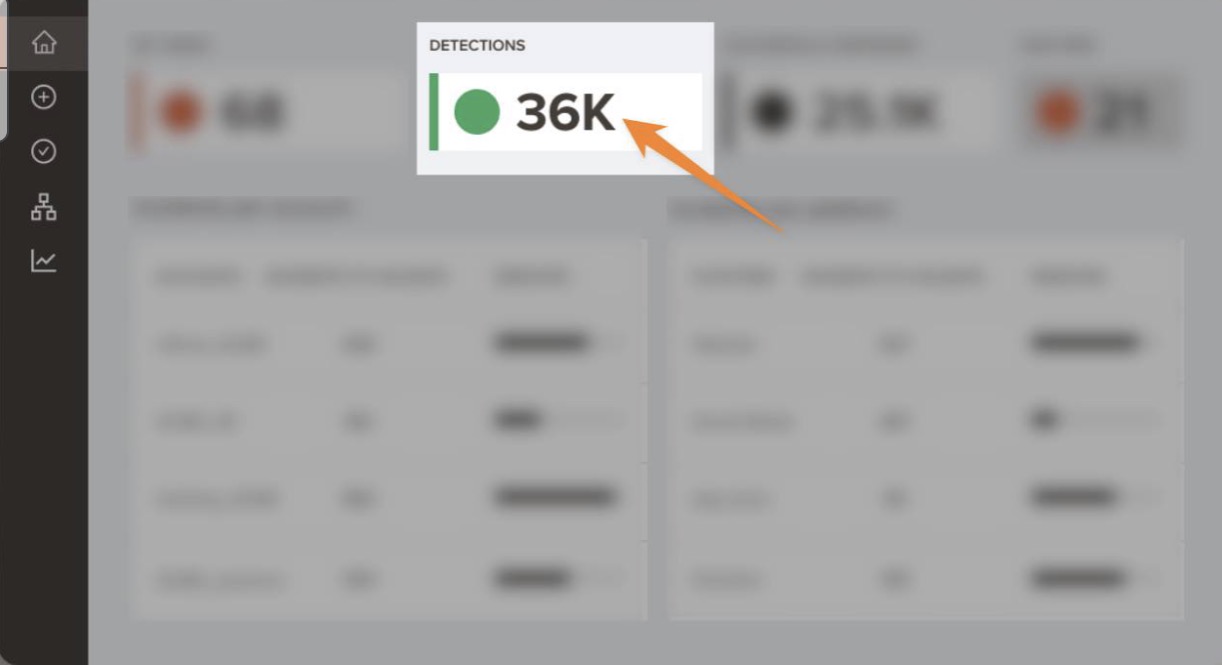
With a managed program, monthly infringements fell to around 200, a sustained reduction of 92%. More than 36,000 links were removed, with a median removal time of one day.
The result came from steady detection, clear priorities, automated workflows, and expert management of the difficult cases. It was not a one-time cleanup.
Read the full fashion brand protection case study.
How Red Points handles trademark monitoring
Red Points is a fully managed AI platform for detecting, validating, and removing trademark infringement across marketplaces, websites, domains, social media, ads, search engines, and apps.
The brand remains in control of its enforcement strategy. Red Points handles the ongoing operational work.
Continuous detection
The platform monitors text, logos, product images, sellers, pricing, stock, domains, and other risk signals.
Machine learning uses previous enforcement decisions to recommend new keywords and validation rules when repeat patterns emerge.
Validation without a heavy client workload
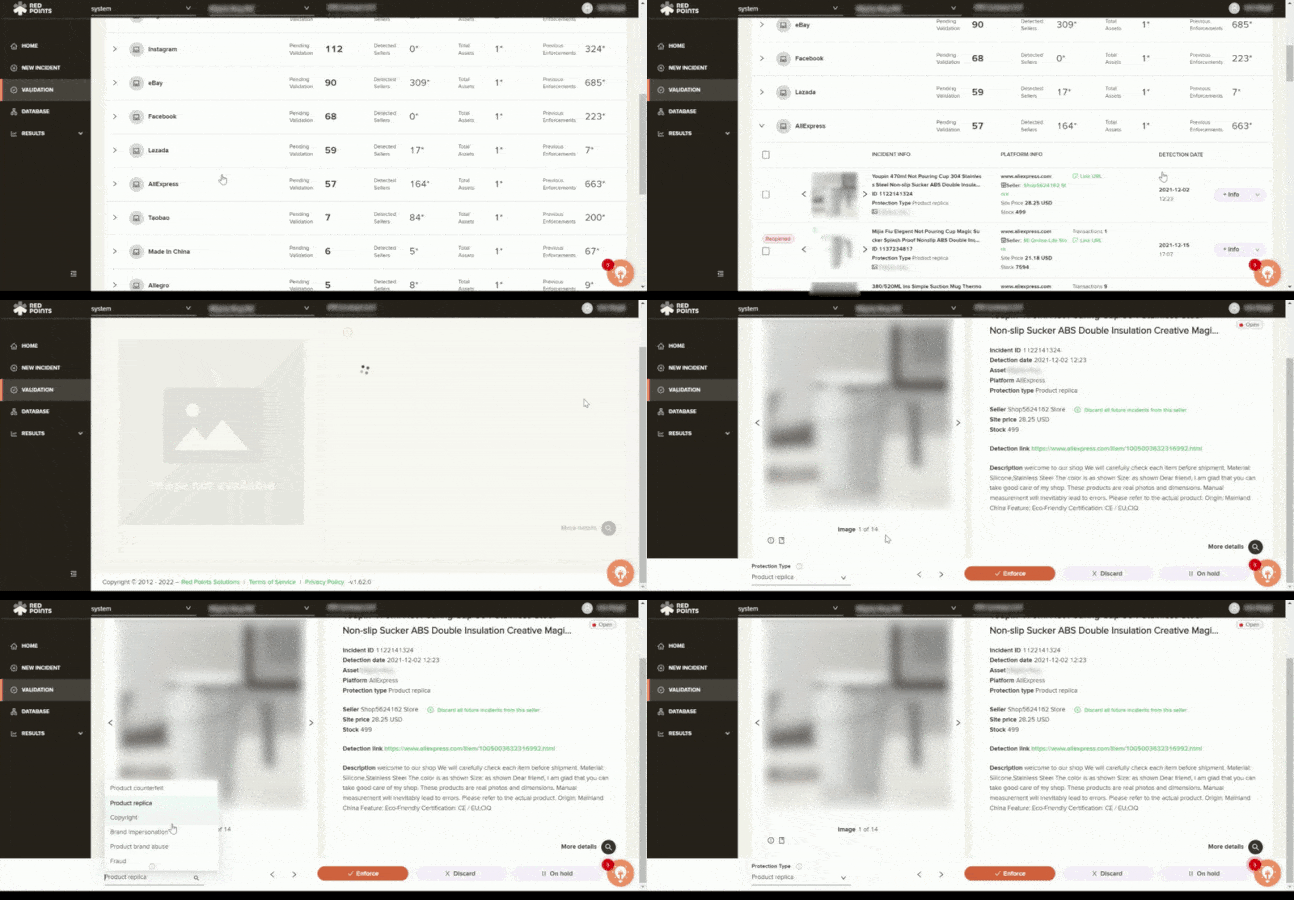
Nothing is enforced outside the brand’s approved strategy.
Brands can approve rules in advance based on factors such as:
- Marketplace
- Authorized distribution
- Price
- Stock
- Seller behavior
- Product category
- Known counterfeit indicators
Clients can review cases directly when they choose.
Automated enforcement after validation
Once an incident is validated under the approved framework, the takedown workflow begins automatically.
Red Points manages submissions, tracking, follow-up, and escalation through the appropriate platform routes.
Unlimited detection and enforcement
Red Points uses a flat-fee model with unlimited detection and enforcement. There are no per-takedown charges or analyst-hour caps when infringement volume increases.
Across its platform, Red Points carries out more than 5.1 million enforcements per year for 1,300+ brands, with a 94–95% enforcement success rate across channels. Results vary by platform, evidence, and incident type.
Red Points’ Trademark Monitoring Software is designed for brands that need the coverage of automation without losing control over what gets enforced.
For wider online abuse, Brand Protection Software brings trademark monitoring together with counterfeit removal, impersonation protection, domain enforcement, ad monitoring, and cross-channel reporting.
Request a demo to see how Red Points can apply trademark monitoring to your products, markets, and enforcement priorities.

Frequently asked questions
Trademark monitoring is the ongoing process of finding unauthorized use of a protected brand name, logo, slogan, symbol, packaging design, or other mark. Online monitoring covers marketplaces, websites, domains, social media, ads, app stores, and search engines.
Trademark watching usually tracks new applications filed with official trademark offices. Online trademark monitoring checks how your mark is being used across commercial channels. A watch can alert you to a conflicting application, while monitoring can find a fake marketplace listing or impersonation site.
There is no general U.S. rule requiring every trademark owner to buy a monitoring service. However, trademark owners are responsible for enforcing their own rights. The USPTO does not monitor every marketplace, website, ad, domain, or social account on a brand’s behalf.
No. A brand can monitor unauthorized use before registration. Registration usually provides a clearer legal basis for platform complaints and formal enforcement, especially in the United States.
For brands exposed to ecommerce, social media, ads, or domain impersonation, monitoring should be continuous. Monthly or quarterly searches may miss short-lived listings, ads, and accounts that can still reach many customers.
Yes, particularly for a small brand with limited exposure. Manual monitoring becomes difficult when there are many products, markets, channels, or repeat sellers. Automated systems provide broader and more consistent coverage.
It should not act outside the enforcement strategy approved by the rights holder. Brands can approve validation rules in advance, use expert review for difficult cases, or review selected incidents themselves. Once a case is validated within that framework, enforcement can begin automatically.
The incident is reviewed against the brand’s rights and enforcement rules. If it is validated, the evidence is prepared and the report is submitted through the appropriate platform, registrar, host, ad network, search engine, or app store route.
Most reports need a direct URL, screenshots, trademark registration details, information about the seller or account, and a clear explanation of how the mark is being used without authorization. Platforms may ask for additional documentation.
Yes, if it uses image and logo recognition. This is important because many infringers avoid writing the brand name while displaying the logo, packaging, or product appearance in the listing images.
Pricing varies by provider, coverage, service level, and enforcement model. Some services charge per incident, per takedown, or by analyst hours. Red Points uses a flat fee with unlimited detection and enforcement.
Compare channel coverage, image recognition, validation controls, enforcement support, repeat-infringer tracking, reporting, expert oversight, and pricing. Ask whether the provider manages takedowns or simply sends alerts to your team.