The best brand protection software for luxury brands in 2027 is Red Points, Crane Authentication, Corsearch, BrandShield, MarqVision, Tracer, and Bolster. Red Points is the strongest choice for luxury houses that need to detect altered counterfeit listings, enforce designs that were never registered, cover domestic Chinese platforms, and show a measurable drop in the counterfeits still visible on their key platforms.
- Detection is the main criterion that separates luxury brand protection vendors, because counterfeit and replica sellers increasingly avoid the brand name.
- About one in three consumers who unknowingly bought a fake luxury item stopped buying from the original brand.
- Products that were never registered as designs can often still be enforced through copyright on the design, depending on the platform.
- China and Hong Kong remain the primary sources of counterfeit goods, so coverage of domestic Chinese platforms matters for luxury brands.
Quick verdict: Red Points is best for luxury brands that need detection beyond the brand name, enforcement for designs that were never registered, and coverage of Chinese cross-border, domestic Chinese, and Southeast Asian marketplaces. Red Points also uses Actor Networks to map cross-channel connections between sellers and actors. It removes fake websites and ads and provides reporting that tracks declining counterfeit content over time, with unlimited detections and takedowns for a flat fee.
Luxury brand protection is different work than general brand protection. A luxury handbag, ring, or watch sells for hundreds or thousands of dollars, and exclusivity is what the buyer pays for. Every cheap copy on a marketplace and every replica on the street reduces that exclusivity.
Red Points has protected more than 1,400 brands since 2011, including luxury jewelers, leather goods houses, and fashion labels. We work on luxury counterfeit cases every day, and that experience informs how we ranked the tools below.
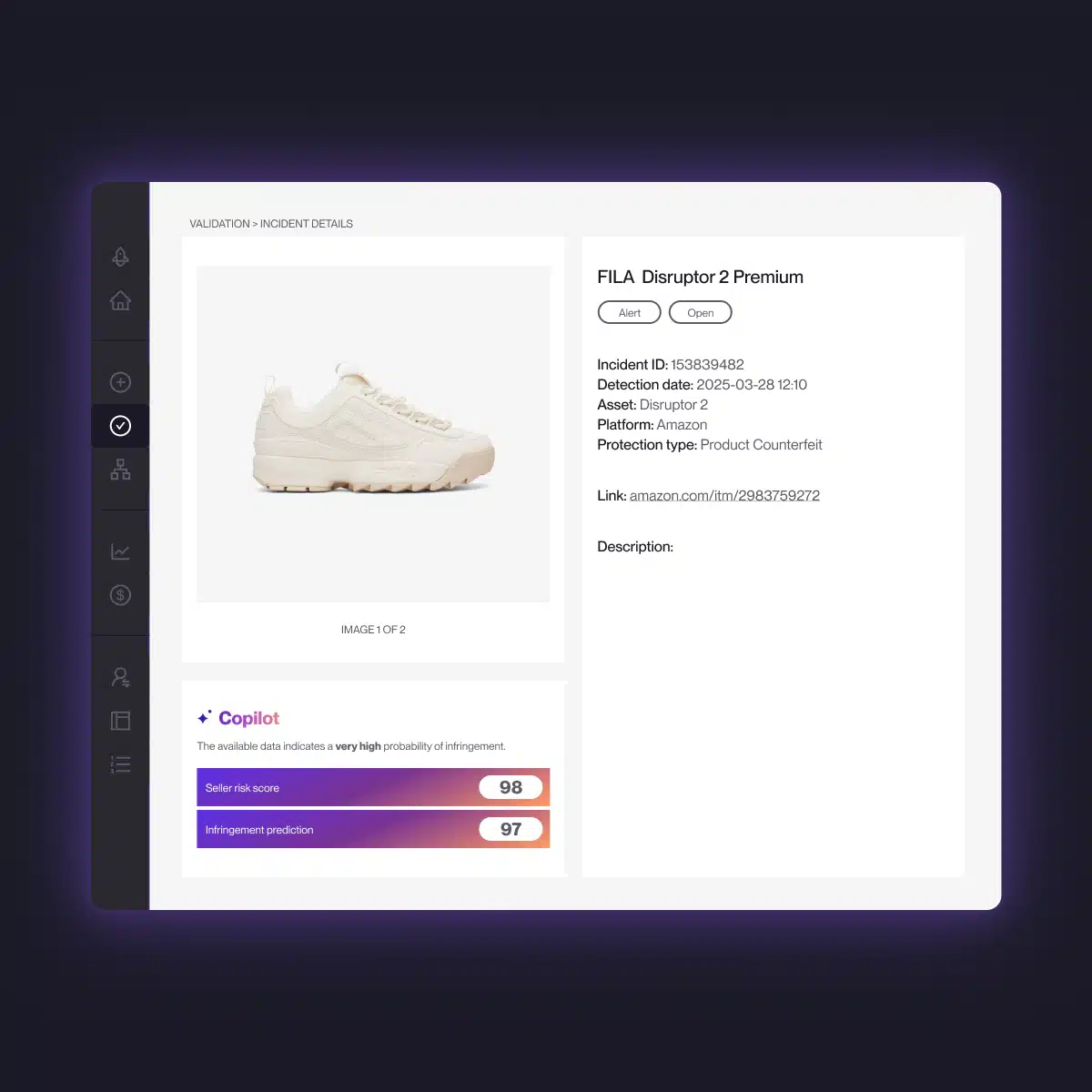
Quick comparison of the best brand protection software for luxury brands
Luxury capability comparison
| Platform | Best for | Detection beyond the brand name | China and Asian marketplace coverage | Fake websites and ads | Public pricing model |
|---|---|---|---|---|---|
| Red Points | Luxury brands facing altered listings, design copies, fake sites, and gray market activity | Misspellings, other languages, logo variations, modified images, across 5,000+ marketplaces | Cross-border, domestic Chinese (Douyin, Pinduoduo, Goofish, Weibo, Weidian, and WeChat), and Southeast Asian marketplaces, with a team in Beijing | Fake websites, including hidden websites found through our domain discovery tool and ads that send buyers to scam sites | Flat fee, unlimited detections and takedowns |
| Crane Authentication | Luxury brands that want physical product authentication alongside online enforcement | AI-powered monitoring with analyst prioritization | Not listed as a dedicated solution* (1,200+ marketplaces monitored globally) | Infringing websites, new domains, and paid search keyword misuse | Not published |
| Corsearch | Enterprise IP teams that pair online enforcement with offline investigations | Logo Detect and image matching | Not listed as a dedicated solution* | Websites, social media, and search engines | Not published |
| BrandShield | Luxury brands whose main risk is fake sites, scam ads, and impersonation | LogoShield AI logo detection, including distorted or partially obscured logos | Not listed as a dedicated solution* | Fake websites, paid ad scams, lookalike domains | Not published |
| MarqVision | Brands focused on SKU-level marketplace detection | SKU-level matching against genuine product data | Chinese marketplaces and social apps, from the Max plan | Domains and impersonation sites | $99 to $2,000 per month, billed yearly (Enterprise on request) |
| Tracer | Brands focused on marketplace counterfeits and gray market sellers | Natural language processing, image recognition, and risk clustering | Not listed as a dedicated solution* | Websites, search engines, and paid ads | Not published |
| Bolster | Brands whose main risk is phishing and scam sites that impersonate them | Logo detection, computer vision, and natural language processing | Not listed as a dedicated solution* | Lookalike domains, fake websites, and fake social profiles | Not published |
*Based on each vendor’s website, checked November 24, 2026.
Comparison summary: Red Points is the strongest choice for luxury brands that need to detect listings without the brand name, enforce iconic designs that were never registered, enforce on domestic Chinese platforms, remove fake sites promoted through ads, and map the seller networks behind repeat listings with Actor Networks, all in one managed service.
Among the other tools, Crane Authentication is a fit for physical product authentication; Corsearch for offline investigations and raids; BrandShield for fake websites, scam ads, and impersonation; MarqVision for SKU-level marketplace detection; Tracer for marketplace and gray market monitoring; and Bolster for automated takedown of phishing and scam sites.
Disclaimer:
Information about the vendors in this article is based on their public websites, press releases, and G2 reviews as of November 24, 2026. Features and pricing may change. We recommend confirming details directly with each vendor.
How we ranked these tools (methodology)
Our analysis draws on:
- 2.3 billion monthly data points across marketplaces, social media, ads, domains, and websites
- Protection programs supporting 1,400+ brands globally, including luxury jewelry, bags, fashion, and premium cosmetics
- Insights from 150+ companies that switched providers to Red Points in the last two years
- Experience from our Customer Success teams who manage luxury accounts
- Vendor websites, product documentation, and public customer reviews
Each tool was assessed against the general criteria we use for every brand protection ranking:
- Channel coverage
- Enforcement scalability
- Automation maturity
- Takedown limits and pricing structure
- Operational model and support
- Revenue impact and long-term ROI
We gave most weight to six luxury-specific criteria, listed in order of importance:
- Advanced detection that finds listings with misspellings, other languages, logo variations, and modified images, not only the brand name in the title
- Coverage of Chinese marketplaces, including domestic Chinese platforms, plus Southeast Asian marketplaces
- Enforcement options for unregistered designs, and the expertise to build supporting documents when a platform asks for more evidence
- Fake website and ad monitoring, especially ads that send buyers to scam sites
- Clear reporting that tracks the decline in visible counterfeits on key platforms over time
- Flexibility to work with each brand’s priorities and channels, and to work alongside in-house teams and investigators
The 7 best brand protection tools for luxury brands
Each tool below is reviewed with the same structure: who it is best for, an overview, pros and cons, its main tools, and pricing.
1. Red Points
Best for: Luxury brands that need to detect altered counterfeit listings, enforce unregistered designs, and track declining counterfeit content on the platforms that matter.
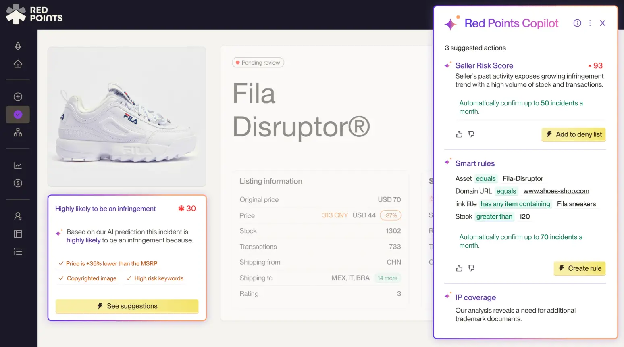
Red Points is an AI brand protection platform managed by Red Points’ experts, with automation the brand controls. It is built for brands that face counterfeits, replicas, fake websites, and impersonation across marketplaces, social media, websites, ads, and domestic Chinese platforms. Our IP enforcement experts run detection and enforcement for each client and handle more than 5.1 million enforcements a year. Every plan includes unlimited detections and takedowns within the scope agreed with the brand, for a flat fee.
Detection is where luxury brands differentiate vendors, so it is where we invest most resources. Counterfeit and replica sellers rarely write the brand name in a title anymore. They misspell it, translate it, use a generic description, show a logo variation, or post a blurred or cropped version of an official product photo. Our detection looks for those signals and checks results against a database of more than 50 million previously identified infringers.
Design enforcement is where luxury cases are won or lost. Many iconic products were never registered as designs. We enforce through design registration where it exists, copyright on the design itself where it does not, and trademark when a listing uses the brand name or logo. When a platform asks why an item copies a design, our IP enforcement experts build the supporting documents that show the similarities.
China coverage is the third deciding factor. According to the EUIPO and OECD, China and Hong Kong (China) remain the primary sources of counterfeit goods. Counterfeiters often source copies on domestic Chinese platforms and relist them on cross-border and Southeast Asian marketplaces. Our team in Beijing monitors and enforces on domestic Chinese platforms, including Douyin, Pinduoduo, Goofish (Xianyu), Weibo, Weidian, and WeChat, combining Chinese-language analysis and image recognition with native-speaker review. We work with these platforms through API connections and priority reporting channels to remove copies before they spread, and alongside the in-house teams and investigators that many luxury houses already run in China.
Repeat sellers rarely work alone. Actor Networks links seller accounts across marketplaces, social media, and websites through shared identifiers, so enforcement can target the network behind the listings, not just individual listings. Our in-house Seller Intelligence team runs OSINT investigations and test purchases to identify the operators behind high-risk networks and support escalation.
Each brand decides how much of its enforcement to automate. Depending on the brand and the nature of its cases, anywhere from 0% to 100% of enforcement can be automated. Authorized seller lists keep legitimate boutiques and retail partners out of enforcement.
Graff is one example. When sophisticated replicas of its jewelry designs spread across Chinese marketplaces, our Managed Services team reviewed design infringements and built automation rules based on price thresholds, image fingerprints, and domain blacklists. Graff removed more than 14,000 infringing listings, blocked 3,500+ unauthorized sellers, and took $6 million in counterfeit value off the market, with regional reporting that showed where infringements appeared and how fast they were resolved.
What are Red Points’ pros and cons?
Red Points covers all six luxury criteria in one managed service.
Pros
- Detection of listings that misspell the brand name, use other languages, use generic descriptions, or show logo variations
- Enforcement through design registration, copyright on the design for unregistered products, and trademark, with supporting documents built by our IP enforcement experts
- A team in Beijing covering domestic Chinese platforms, plus Chinese cross-border and Southeast Asian marketplaces
- In-house OSINT investigations and Actor Networks, which link sellers across channels to show which networks cause the most harm and which sellers deserve investigation
- Fake website and ad monitoring, with priority on ads that send buyers to scam sites
- Automation set by each brand, with authorized seller lists that protect legitimate retailers
- Flat fee with unlimited detections and takedowns, and a dedicated Customer Success Manager on every plan
- Rated 4.9 on G2 from 70 reviews as of November 24, 2026, tied for the highest rating in this list
Cons
- Trademark and design registration available through industry partners, not natively
What brand protection tools does Red Points offer luxury brands?
Red Points gives luxury brands detection, enforcement, and reporting for counterfeits, replicas, fake websites, and gray market activity in one managed program.
- Advanced detection: Finds counterfeit and replica listings through keyword variations, other languages, and logo and image signals
- Design enforcement: Removes design copies through design registration, copyright on the design, or trademark, depending on the listing and the platform
- Domestic China protection: Monitors and enforces on domestic Chinese platforms with a local team
- Fake website and ad removal: Takes down scam sites and the paid ads that send buyers to them
- Gray market protection: Covers gray market and parallel import activity for brands that sell through distributors or in premium cosmetics
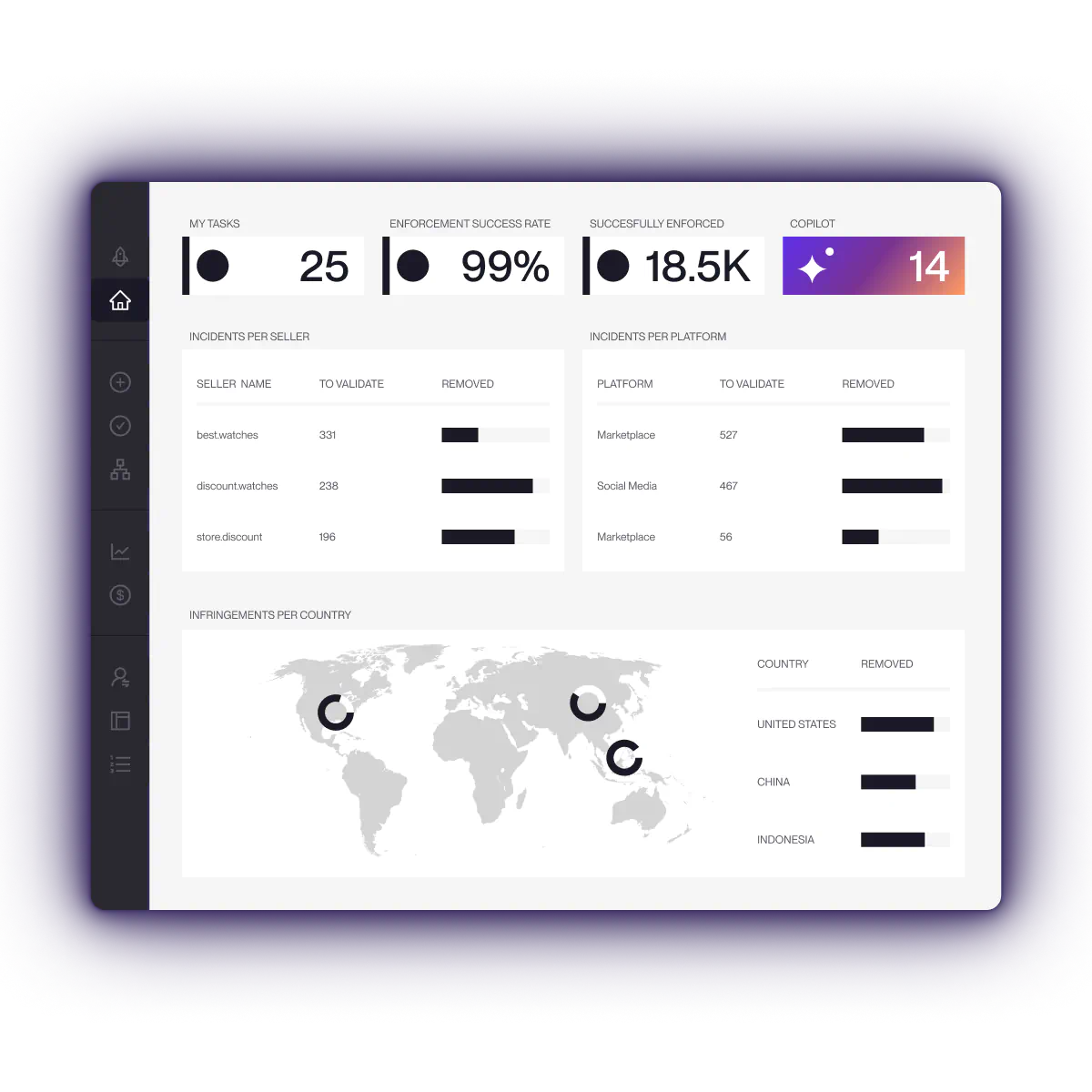
- Outcome reporting: Dashboards and regional reports that track how much counterfeit content remains on each key platform over time
How much does Red Points cost?
Red Points uses a flat fee model. Detections and takedowns are unlimited within the scope agreed with each brand, and a dedicated Customer Success Manager is included in every plan.
2. Crane Authentication
Best for: Luxury brands that want physical product authentication alongside online monitoring.
Crane Authentication is a brand protection and authentication provider. Its core is physical security: authentication labels such as PROFOUND and OptiQor, and OpSec InSight Track & Trace, which gives each product a unique identifier and records its movement through the supply chain.
Crane Authentication’s online brand protection service monitors more than 1,200 marketplaces, social media platforms including Meta and TikTok, websites, newly registered domains, and paid search. The company reports a 95% marketplace enforcement success rate and a 97% social media enforcement success rate, and it offers investigative services for repeat offenders and seller networks.
Crane Authentication does not have a G2 profile as of November 24, 2026.
What are Crane Authentication’s pros and cons?
Crane Authentication combines physical authentication with online monitoring.
Pros
- Physical authentication labels and track-and-trace for luxury goods
- Monitoring of 1,200+ marketplaces, social media, websites, and paid search
- Monitoring of newly registered domains
- Online Radar pricing intelligence for gray market activity
- Investigative services for repeat offenders and coordinated seller networks
Cons
- Physical authentication requires adding labels or codes to products or packaging
- Image or logo recognition is not listed on its online brand protection page (checked November 24, 2026)
- Chinese marketplace coverage is not listed on its website (checked November 24, 2026)
What brand protection tools does Crane Authentication offer luxury brands?
Crane Authentication’s tools combine product authentication with online enforcement.
- Authentication labels: PROFOUND and OptiQor labels for products and packaging
- OpSec InSight Track & Trace: Assigns each product a unique identifier and records its movement through the supply chain
- Online brand protection: Monitors marketplaces, social media, websites, and new domains for counterfeit listings
- Paid search protection: Tracks misuse of brand keywords in search ads
- Investigative services: Pursues repeat offenders, seller networks, and supply chain sources
How much does Crane Authentication cost?
Crane Authentication doesn’t publish pricing on its website. Contact the company for a quote.
3. Corsearch
Best for: Enterprise luxury brands that want full trademark lifecycle management and online enforcement tied to offline investigations and raids.
Corsearch is a trademark and brand protection company with a brand protection platform, Corsearch Zeal 2.0, that uses AI-native detection with expert oversight. Corsearch lists Logo Detect, image matching, and AI clustering that connects related seller accounts. The company reports a 95% takedown success rate and 10 million listings removed each year.
Corsearch also offers Investigations 360, a service that traces the people and places behind counterfeit operations, and Corsearch states that it played a key role in offline action against Pandabuy, working with affected brands and law enforcement.
Corsearch holds a 4.6 rating from 26 reviews on G2 as of November 24, 2026, and reviewers highlight responsive support, based on feedback from software review platforms.
What are Corsearch’s pros and cons?
Corsearch pairs logo and image detection with offline investigation services.
Pros
- Logo Detect and image matching inside Corsearch Zeal 2.0
- Investigations 360 for offline investigations and raids
- Investigations support for offline action, including the Pandabuy case
- Trademark clearance and management alongside brand protection
- Responsive support, based on feedback from software review platforms
Cons
- Domestic Chinese platform coverage is not listed on its brand protection page (checked November 24, 2026)
What brand protection tools does Corsearch offer luxury brands?
Corsearch’s tools span online detection, enforcement, investigations, and trademark services.
- Corsearch Zeal 2.0: AI-native detection and prioritization of brand threats
- Logo Detect: Identifies unauthorized logo use in images
- Auto-moderation: Applies rule-based automation and API-based takedowns
- Investigations 360: Traces counterfeit networks offline to their source
- Trademark services: Trademark clearance, screening, and monitoring
How much does Corsearch cost?
Corsearch does not publish pricing on its website. For more details, read our full Red Points vs Corsearch comparison.
4. BrandShield
Best for: Luxury brands whose largest risk is fake websites, scam ads, and brand impersonation.
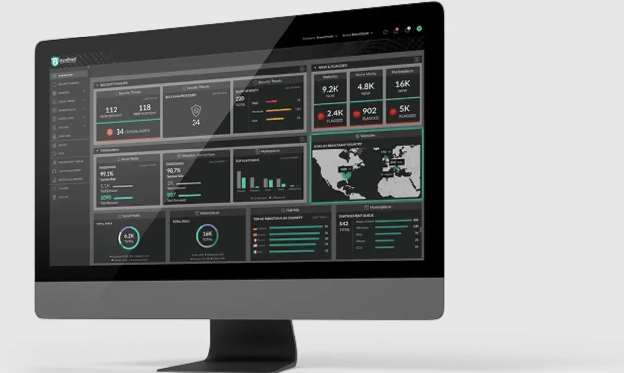
BrandShield is a brand protection and external cybersecurity platform that lists luxury among the industries it serves. Its solutions include marketplace brand protection, online counterfeit protection, paid ad scam protection, domain protection, impersonation protection, and dark web monitoring, with grey market listed as a use case.
BrandShield’s AI.ClusterX technology groups related threats so enforcement can target a network instead of a single listing. Its LogoShield product uses AI-based technology to detect logo infringement, including logos that are distorted or partially obscured. BrandShield describes its enforcement managers as having IP legal education.
BrandShield holds a 4.7 rating from 145 reviews on G2 as of November 24, 2026.
What are BrandShield’s pros and cons?
BrandShield focuses on fake sites, scam ads, and impersonation.
Pros
- Coverage of fake websites, paid ad scams, and lookalike domains
- AI.ClusterX groups related threats across channels
- LogoShield detects distorted or partially obscured logos
- Lists luxury as a served industry
- Enforcement managers with IP legal education
Cons
- Domestic Chinese marketplace coverage is not listed on its website (checked November 24, 2026)
What brand protection tools does BrandShield offer luxury brands?
BrandShield’s tools cover counterfeits, impersonation, and cyber-led brand abuse.
- Marketplace brand protection: Detects counterfeit listings on online marketplaces
- Paid ad scam protection: Targets fraudulent ads that use the brand
- Domain protection: Monitors lookalike and squatted domains
- AI.ClusterX: Clusters related threats for network-level enforcement
- LogoShield: Detects logo infringement across websites, social media, marketplaces, paid ads, and apps
- Dark web monitoring: Tracks brand threats on dark web forums
How much does BrandShield cost?
BrandShield does not publish pricing on its website. For more details, read our full Red Points vs BrandShield comparison.
5. MarqVision
Best for: Brands that want SKU-level marketplace detection.
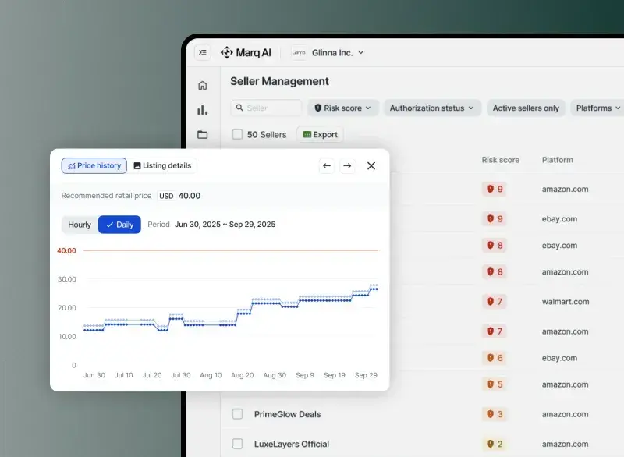
MarqVision is a brand protection platform founded in 2020 that serves more than 500 brands.
MarqVision’s detection matches each listing against a brand’s genuine product data at the SKU level, which the company says catches fakes that copy product specifications and images while avoiding the logo. MarqVision lists coverage of more than 1,500 platforms, and its plans include Chinese marketplaces and social apps from the Max plan. The company also offers MarqLaw for civil litigation, criminal raids, and test purchases on its Enterprise plan.
MarqVision holds a 4.9 rating from 29 reviews on G2 as of November 24, 2026. Reviewers praise responsive account teams and weekly check-ins, though several note that removals can take longer than expected, based on feedback from software review platforms.
What are MarqVision’s pros and cons?
MarqVision focuses on SKU-level marketplace detection, while takedown speed is the most common friction point in public reviews.
Pros
- SKU-level detection designed to catch fakes that avoid the logo
- Coverage of 1,500+ platforms, including Chinese marketplaces and social apps (from the Max plan)
- MarqLaw offline enforcement, including civil litigation, criminal raids, and test purchases (Enterprise plan)
- Responsive account teams with weekly check-ins, based on feedback from software review platforms
Cons
- Removals can take longer than expected, based on feedback from software review platforms
- Pricing can be a stretch for small businesses, based on feedback from software review platforms
What brand protection tools does MarqVision offer luxury brands?
MarqVision’s tools cover marketplace counterfeits, impersonation, unauthorized sellers, and offline action.
- Full-Stack Detection: Compares listings against genuine product data at the SKU level
- Impersonation removal: Takes down fake domains and impersonation sites
- Reseller intelligence: Traces inventory leakage and clusters repeat offenders
- MarqLaw: Extends enforcement offline into civil litigation, criminal raids, and test-purchase programs (Enterprise plan)
- MarqFolio: Handles trademark registration, renewal, and watch
How much does MarqVision cost?
MarqVision publishes self-serve plans from $99 to $2,000 per month, billed yearly, with Enterprise pricing on request. Chinese platforms are included from the Max plan, while test purchases, gray market coverage, and analysts and IP lawyers on every case are part of the Enterprise plan (checked November 24, 2026). For more details, read our full Red Points vs MarqVision comparison.
6. Tracer
Best for: Brands focused on marketplace counterfeits and gray market sellers, with social, website, and ad monitoring alongside.

Tracer (formerly Appdetex) is a brand protection company that uses AI to detect and remove brand abuse across marketplaces, social media, websites, app stores, search engines, and paid ads. Tracer states that it monitors over 95% of all online marketplace traffic, using natural language processing, image recognition, and risk clustering to find fake products, unauthorized sellers, and gray market sellers.
Tracer’s image recognition uses machine vision to detect trademarks, copyrights, and logos across channels. Its Flora product, which Tracer describes as an agentic AI system built for brand protection, supports its enforcement work, and the company says it moves enforcement “from weeks to hours.”
Tracer AI holds a 2.5 rating from 3 reviews on G2 as of November 24, 2026.
What are Tracer’s pros and cons?
Tracer focuses on marketplace monitoring combined with gray market and partner compliance.
Pros
- Monitoring of over 95% of online marketplace traffic, according to the company
- Natural language processing, image recognition, and risk clustering
- Gray market and partner compliance monitoring
- Coverage of social media, websites, app stores, search, and paid ads
Cons
- Luxury and fashion are not listed as industries on its website (checked November 24, 2026)
- Chinese marketplace coverage is not listed on its website (checked November 24, 2026)
What brand protection tools does Tracer offer luxury brands?
Tracer’s tools cover marketplace, social, web, and ad abuse.
- Marketplace monitoring: Finds fake products, unauthorized sellers, and gray market sellers
- Social media monitoring: Finds infringing posts and fake profiles and pages
- Image recognition: Detects trademarks, copyrights, and logos in images
- Search and advertising monitoring: Tracks brand abuse in search engines and paid ads
- Tracer Flora: Agentic AI for brand protection workflows
How much does Tracer cost?
Tracer does not publish pricing on its website. Contact the company for a quote.
7. Bolster
Best for: Brands whose main risk is phishing and scam sites that impersonate the brand.
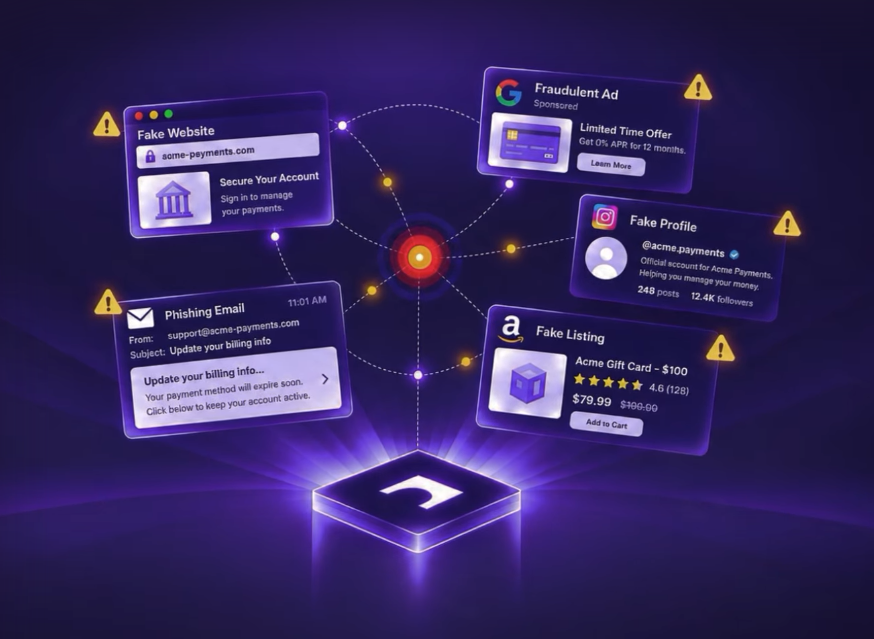
Bolster is an AI-based brand protection platform that detects and removes lookalike domains, fake websites, fake social media profiles, fraudulent mobile apps, and dark web threats. Its detection combines natural language processing, logo detection, computer vision, and deep learning.
Bolster’s takedowns are automated, and the company lists partnerships with more than 1,500 domain and hosting providers. The company states that its average API-based takedown time for malicious URLs is two minutes, and it tracks removed domains and reissues takedown requests if a site returns.
Bolster AI holds a 4.5 rating from 9 reviews on G2 as of November 24, 2026.
What are Bolster’s pros and cons?
Bolster focuses on automated removal of scam and phishing sites.
Pros
- Automated takedowns, with 1,500+ domain and hosting provider partners
- Monitoring of typosquatted domains across 1,300+ top-level domains
- Logo detection and computer vision for brand asset misuse
- Relisting checks that reissue takedowns when a site returns
Cons
- Luxury and fashion are not listed as industries on its website (checked November 24, 2026)
- Chinese marketplace coverage is not listed on its website (checked November 24, 2026)
What brand protection tools does Bolster offer luxury brands?
Bolster’s tools focus on impersonation and scams across web, social, and apps.
- Web and domain protection: Finds lookalike domains, typosquatted URLs, and fake websites
- Social media protection: Targets fake profiles, scam posts, and executive impersonation
- App store protection: Detects fraudulent mobile apps
- Dark web monitoring: Monitors forums, Telegram channels, and marketplaces for stolen assets
- Automated takedowns: Removes phishing sites and fraudulent accounts
How much does Bolster cost?
Bolster does not publish pricing on its website. Contact the company for a quote.
What does brand protection software do for luxury brands?
Brand protection software for luxury brands finds counterfeit and replica listings, fake websites, and scam ads that copy a luxury brand’s designs, logos, and images, and then removes them through the right IP route for each platform.
The core targets for a luxury brand are:
- Counterfeits and replicas: Products that copy the design, with or without the brand name or logo
- Altered listings: Misspelled brand names, other languages, generic descriptions, logo variations, and modified official images
- Fake websites: Scam stores that display the brand’s logo and products, often promoted through ads offering 50% to 80% off
- Gray market listings: Genuine products sold outside authorized channels, a larger concern for brands with global distributors and for premium cosmetics
The core functions of the software are:
- Monitoring: Continuous scanning of marketplaces, domestic Chinese platforms, social media, websites, and ads
- Detection: Identification of infringements through keyword variations, image signals, and seller history
- Enforcement: Reports filed under design registration, copyright, or trademark, with supporting documents where a platform asks for them
- Reporting: Dashboards that track how much counterfeit content remains on each platform over time
Why does the right brand protection software matter for luxury brands?
The right brand protection software matters because counterfeits damage both revenue and the exclusivity that luxury buyers pay for.
Our survey Counterfeit Buyer Teardown shows the scale of the problem:
- 1 in 4 luxury counterfeit purchases are unintentional
- 32% of consumers who accidentally bought a fake luxury item stopped buying from the original brand
- Social media ads that redirect buyers to infringing websites grew 179% between 2023 and 2024
- Standalone website infringements across our client base grew 59% between 2022 and 2024
A platform that only searches for the brand name misses most of today’s luxury fakes. A platform without domestic Chinese coverage removes copies downstream while the source keeps shipping. A platform that reports only takedown counts can’t show whether your key marketplaces carry fewer fakes than they did last quarter.
How do luxury brands enforce against counterfeits and replicas?
Luxury enforcement is a layered process that matches each listing to the strongest IP right available for that product and platform.
- Design registration first: Where a design is registered, it is the primary route in the countries that cover it.
- Copyright on the design/ornamental copyright: Many iconic products were never registered as designs, and registration may no longer be possible. Copyright on the design itself treats the product’s shape and ornament as a protected creative work. It works well, including on many Chinese platforms, though not every platform accepts it.
- Supporting documents: Platforms review design complaints carefully and may ask how a listed item matches the original. Documents that display the similarities, and what marks the item as a copy, are a growing part of successful design enforcement.
- Copyright on product photos: Platforms accept image complaints more readily when the photo is distinctive and creative. Stock images and products on a plain white background can be harder to protect.
- Trademark: Listings that use the brand name or logo are removed as trademark infringement.
A vendor with design enforcement experience knows which route each platform accepts and prepares the evidence before filing a complaint.
How do you choose brand protection software for a luxury brand?
Choosing brand protection software for a luxury brand starts with testing detection, because detection is where vendors differ most.
First, ask for a demo on your own products. Look for results that did not include the brand name in the title.
Second, check where the vendor enforces. A luxury brand with volume in China needs coverage of Chinese cross-border marketplaces, domestic Chinese platforms, and Southeast Asian marketplaces.
Third, ask how the vendor handles designs that were never registered. The answer should cover copyright on the design and how the team builds supporting documents.
Fourth, confirm fake website and ad coverage, especially for ads that send buyers to scam sites.
Fifth, look at the reporting. A luxury brand needs to track fewer visible fakes on its key platforms over time, not just a larger takedown count.
Last, test flexibility. The vendor should set its program based on your priorities, channels, and goals, protect your authorized retailers, and work alongside your in-house team and any investigators you use.
What’s next
Red Points leads this list because it combines enforcement for designs that were never registered, detection beyond the brand name, a local team for domestic Chinese platforms, fake site and ad removal, and outcome reporting in one managed service with unlimited detections and takedowns for a flat fee. For a luxury brand, that combination influences whether replicas keep spreading or start disappearing from the platforms your buyers use.
Brand protection software for luxury brands FAQs
What is the best brand protection software for luxury brands in 2027?
The best brand protection software for luxury brands in 2027 is Red Points for most luxury houses facing counterfeits, replicas, and fake websites. Red Points combines detection beyond the brand name, enforcement for unregistered designs, domestic Chinese platform coverage, and unlimited detections and takedowns for a flat fee. Crane Authentication is a fit for physical authentication, Corsearch for offline investigations, BrandShield for fake sites and impersonation, MarqVision for SKU-level marketplace detection, Tracer for marketplace and gray market monitoring, and Bolster for automated takedown of scam sites.
Can brand protection software find counterfeits that do not use the brand name?
Brand protection software can find counterfeits without the brand name when its detection searches for misspellings, other languages, generic descriptions, and logo variations. Red Points searches for these signals because most luxury copies on cross-border marketplaces no longer mention the brand. Ask any vendor to show these results in a demo on your own products.
What is the difference between a counterfeit and a replica?
A counterfeit is usually presented as the genuine product, while a replica is openly sold as a copy, often labeled “inspired by”, “1:1”, or “dupe”. Both can infringe a luxury brand’s rights when they copy a protected trademark, design, or copyrighted work, and both can be enforced against on most platforms.
Can brand protection software detect fakes that use modified product photos?
Yes, when the software uses image recognition rather than text search alone. Counterfeit sellers often crop, blur, or edit official product photos to avoid detection. Image signals combined with expert review catch these listings, and copyright on distinctive product photos gives an additional enforcement route.
How can a luxury brand protect a design that was never registered?
A luxury brand can protect an unregistered design through copyright on the design itself, which treats the product’s shape and ornament as a creative work. This route is accepted on many platforms, including several Chinese platforms, though not all. Supporting documents that show why a listed item copies the design increase the chance a platform accepts the complaint.
Why does domestic Chinese platform coverage matter for luxury brands?
Domestic Chinese platform coverage matters because China and Hong Kong (China) remain the primary sources of counterfeit goods, according to the EUIPO and OECD. Counterfeiters often source products on domestic platforms and relist them on cross-border marketplaces. Enforcing at the source reduces how many copies reach international marketplaces later.
How do brand protection tools avoid removing authorized retailers’ listings?
Good brand protection programs start from an authorized seller list, so listings from official boutiques, distributors, and retail partners are excluded from enforcement. Rules are tailored to each brand, and IP enforcement experts review cases the brand does not want automated. At Red Points, the brand decides how much enforcement to automate.
Do luxury brands need gray market protection?
Luxury brands need gray market protection when they sell through distributors worldwide or sell premium cosmetics. For most jewelry and leather goods houses, counterfeits and replicas are the larger threat. Red Points covers both, so a brand can set its priorities and shift them as its distribution changes.
How should a luxury brand measure brand protection results?
A luxury brand should measure brand protection by tracking the decline in visible counterfeits on its key platforms over time. Takedown counts track activity. A lower volume of fakes on the marketplaces your buyers use tracks impact, and Red Points reports both.
Does Red Points remove fake websites promoted through ads?
Yes, Red Points removes fake websites and the paid ads that send buyers to them, including ads that display a brand’s logo with deep discounts. Ad and website enforcement runs alongside marketplace enforcement in the same program.