


An intellectual property dispute can arise when someone uses, copies, discloses, or challenges rights connected to trademarks, patents, copyrights, trade secrets, or other protected assets.
Some disputes can be resolved through platform enforcement, negotiation, licensing, or a cease and desist letter. Others require litigation, damages, injunctions, or emergency court relief.
This guide explains how intellectual property disputes work, the main resolution options, and what businesses should know about patent infringement damages, trademark infringement damages, temporary restraining orders, and trade secret litigation.
TL;DR
- An intellectual property dispute involves disagreement over the ownership, use, validity, licensing, or infringement of IP rights.
- Common disputes involve trademarks, patents, copyrights, trade secrets, and licensing agreements.
- Not every case requires litigation; platform enforcement, negotiation, and settlement may be faster.
- Patent and trademark damages depend on the evidence, conduct, and legal basis of the claim.
- Temporary restraining orders and trade secret litigation are generally reserved for higher-risk or urgent disputes.
What is an intellectual property dispute?
An intellectual property dispute is a disagreement involving rights such as trademarks, patents, copyrights, designs, or trade secrets.
Disputes may concern infringement, but they can also involve ownership, licensing, validity, royalties, confidentiality, or the scope of a right.
For example, a business may claim that a competitor is using a confusingly similar trademark, selling a product covered by a patent, copying copyrighted material, or using confidential business information without authorization.
For a broader overview of the underlying rights, see our guide to intellectual property infringement.
Common types of intellectual property disputes
Trademark disputes
Trademark disputes often concern unauthorized use of a brand name, logo, packaging, or other identifier in a way that may cause customer confusion.
Typical examples include counterfeit products, fake websites, impersonation accounts, and confusingly similar business names.
Our guide to business name trademark infringement explains how confusion can arise even when two marks are not identical.
Patent disputes
Patent disputes usually focus on whether a product or process falls within the scope of a valid patent.
They may also involve validity, ownership, licensing, or inventorship.
Before escalating, patent owners should confirm that the patent is active, relevant to the accused product, and enforceable in the applicable territory.
See our guide on how to deal with patent infringement for a more detailed enforcement process.
Copyright disputes
Copyright disputes can arise when protected content such as images, video, written material, software, music, or other creative works are copied, distributed, displayed, or adapted without authorization.
Ownership records, contracts, licenses, and original source files can all become important evidence.
Trade secret disputes
Trade secret disputes concern confidential business information that derives value from remaining secret.
This can include formulas, source code, pricing models, manufacturing processes, algorithms, business plans, or customer information.
Unlike registered IP rights, trade secret protection depends heavily on whether the business took reasonable steps to keep the information confidential.
What should you do when an IP dispute starts?
The first step is to confirm the right involved and preserve evidence.
Before contacting the other party, collect records such as registration details, screenshots, URLs, seller information, transaction records, product samples, contracts, or confidentiality agreements.
Then assess the commercial impact.
A single marketplace listing may be suitable for platform enforcement, while a large repeat infringement network may justify stronger legal action.
Possible next steps include direct negotiation, a cease and desist letter, platform reporting, licensing discussions, mediation, arbitration, or litigation.
The right choice depends on the value of the IP, the scale of harm, the evidence available, and the result the business wants to achieve.
How can an intellectual property dispute be resolved?
Many disputes are resolved without going to trial.
Platform enforcement can work well for online infringement. Direct negotiations or cease and desist letters may stop conduct quickly when the other party is identifiable and willing to cooperate.
Mediation and arbitration can also provide alternatives to court proceedings.
Litigation becomes more appropriate when a business needs damages, an injunction, discovery, or a binding decision on ownership, validity, or liability.
Patent infringement damages
In the United States, patent infringement damages are intended to compensate the patent owner for proven infringement. The most common approaches are lost profits and reasonable royalties.
Lost profits
Lost profits may be available where the patent owner can show that it would likely have made sales or earned profits but for the infringement. This usually requires evidence connecting the infringing activity to the claimed financial loss.
Reasonable royalty
Where lost profits cannot be established, damages may be based on a reasonable royalty. This estimates what the parties might reasonably have agreed to pay for use of the patented technology.
Enhanced damages
Courts may increase damages in particularly serious cases, including certain forms of willful infringement.
These enhanced damages are discretionary rather than automatic.
Patent owners should also act promptly because timing, notice, and patent-marking rules can affect the damages available.
Trademark infringement damages
Trademark remedies vary depending on the claim and the conduct involved.
In qualifying US cases, a trademark owner may seek the defendant’s profits, its own proven damages, and certain litigation costs.
Actual damages and profits
A trademark owner may seek compensation for measurable losses such as diverted sales or reduced licensing value.
Courts may also award profits earned through the infringement.
Counterfeit trademark cases
Counterfeit cases can involve additional remedies.
In some US cases, the trademark owner may elect statutory damages rather than proving actual losses and profits.
This is one reason ordinary trademark infringement and trademark counterfeiting should not be treated as identical claims.
Continuous trademark monitoring can help brands identify misuse before it develops into a larger dispute.
What is a temporary restraining order?
A temporary restraining order, or TRO, is short-term emergency court relief intended to prevent immediate harm while a court considers longer-term measures.
In intellectual property disputes, a TRO may be relevant when waiting could allow serious harm to continue.
Examples can include the rapid distribution of confidential information, dissipation of assets, destruction of evidence, or continued activity that could make later relief ineffective.
A TRO is not automatically available because infringement is alleged. The applicant must support the request with evidence showing urgency and irreparable harm.
In US federal court, a TRO issued without notice is generally short-lived and may be followed quickly by proceedings concerning a preliminary injunction.
Because the requirements are procedural and fact-specific, businesses seeking this type of relief should work with qualified litigation counsel.
Trade secret litigation
Trade secret litigation usually focuses on three questions:
- Did the information qualify as a trade secret?
- Did the owner take reasonable steps to keep it secret?
- Was it acquired, disclosed, or used improperly?
Evidence can include access logs, confidentiality agreements, download records, employee communications, device activity, or documents transferred to third parties.
Trade secret claims are often weakened when a business cannot show meaningful confidentiality controls.
Useful safeguards include restricting access by role, using NDAs, protecting sensitive systems, reviewing employee permissions, and revoking access when someone leaves the company.
Potential remedies in US trade secret cases can include injunctions, actual-loss damages, unjust enrichment, reasonable royalties in appropriate cases, and enhanced damages for willful and malicious misappropriation.
When should an IP dispute escalate to litigation?
Litigation is usually most appropriate when the commercial stakes justify it.
That may include situations where infringement continues despite earlier enforcement, the financial harm is substantial, confidential information is at risk, or the business needs damages, discovery, or injunctive relief.
Lower-level cases may be resolved more efficiently through platform enforcement or direct settlement.
The objective should determine the route.
A company seeking the removal of one listing has different needs from a brand pursuing a coordinated network of repeat counterfeit sellers.
Evidence that can support an IP dispute
Strong IP disputes usually rely on three kinds of evidence.
First, the business needs proof of the right itself, such as trademark registrations, patent records, copyright ownership, licenses, or confidentiality agreements.
Second, it needs evidence of the alleged violation, including screenshots, listings, samples, technical comparisons, communications, or transaction records.
Third, where damages are sought, the business may need evidence of commercial impact such as lost sales, diverted customers, infringer revenue, or licensing losses.
For physical infringement cases, test purchases can provide additional evidence beyond what appears online.
How Red Points supports IP enforcement and litigation escalation
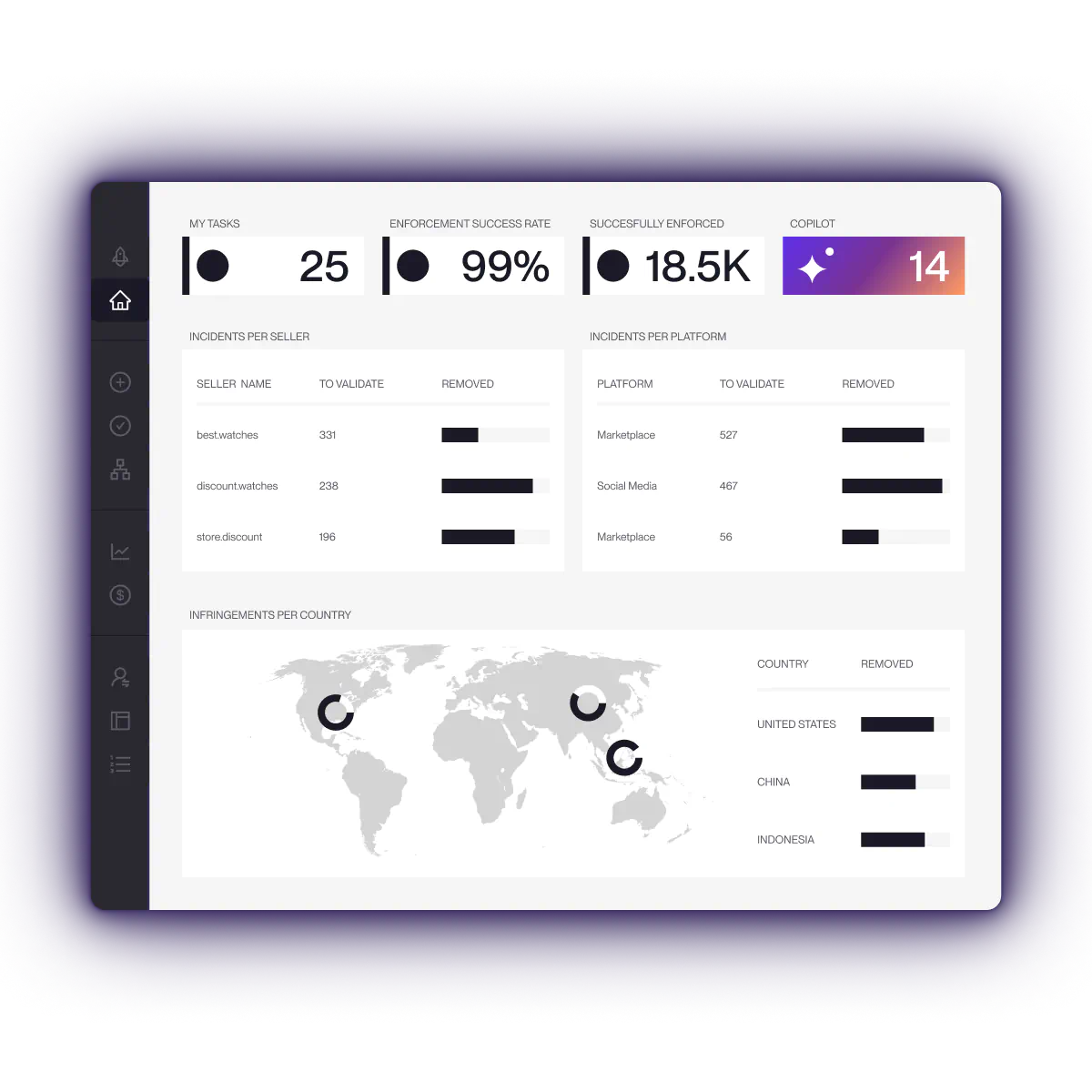
Red Points helps brands identify, validate, and enforce online IP infringements before deciding which cases need legal escalation.
The Brand Protection platform monitors marketplaces, websites, social media, ads, and other channels for potential misuse of protected brand assets.
For higher-risk cases, IP and offline services can support evidence gathering through investigations, test purchases, seller notices, and network mapping.
For eligible counterfeit cases in the United States, the Revenue Recovery Program can also support litigation through legal partners, including actions aimed at seller disruption and fund recovery.
This creates a clearer escalation path: lower-level infringements can be handled through standard enforcement, while repeat or high-value actors can be prioritized for deeper legal action.
Request a demo to see how Red Points can support IP enforcement and escalation.
Frequently asked questions
What is an intellectual property dispute?
It is a disagreement involving the ownership, use, validity, licensing, or infringement of intellectual property rights.
Does every IP dispute go to court?
No. Many disputes are resolved through platform enforcement, negotiation, cease and desist letters, mediation, arbitration, or settlement.
What damages can be awarded for patent infringement?
US patent damages may include lost profits or a reasonable royalty, with enhanced damages available in certain serious cases.
What damages can be awarded for trademark infringement?
Depending on the claim, remedies may include the trademark owner’s damages, the defendant’s profits, costs, and statutory damages in qualifying counterfeit cases.
What is a temporary restraining order?
A TRO is short-term emergency court relief designed to prevent immediate harm while the court considers longer-term measures.
What is trade secret litigation?
It is litigation involving confidential business information that was allegedly acquired, disclosed, or used improperly.
When should a business litigate an IP dispute?
Litigation is most appropriate when the harm is significant, infringement continues, urgent relief is needed, or the business requires damages, discovery, or a binding court decision.